Snake Plant
$22 + tax
6-inch pot
Also called
- Formerly Sansevieria trifasciata
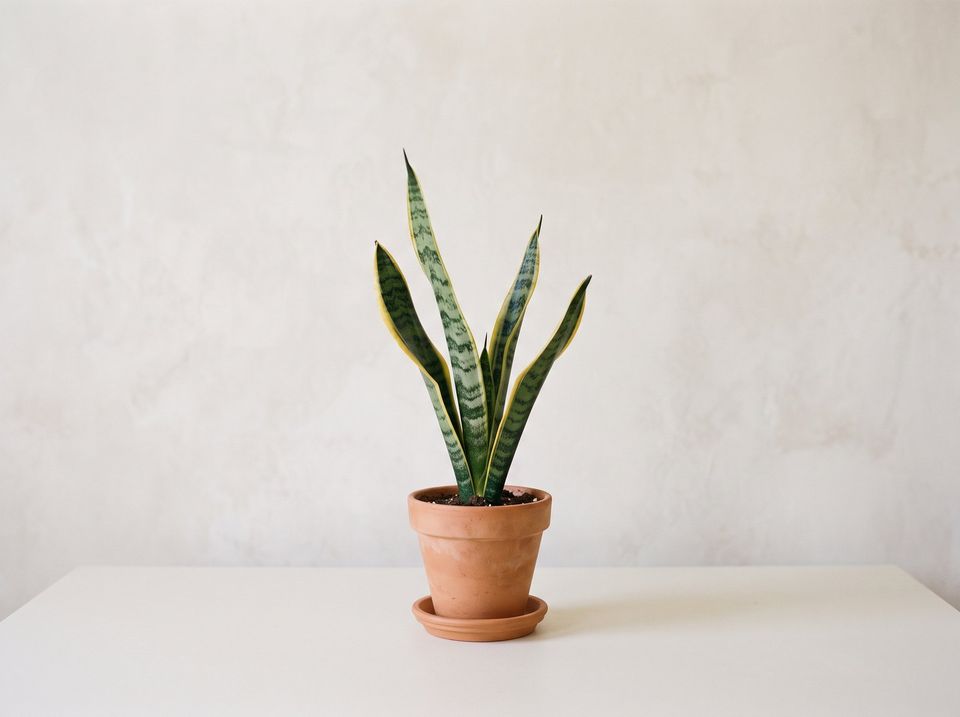
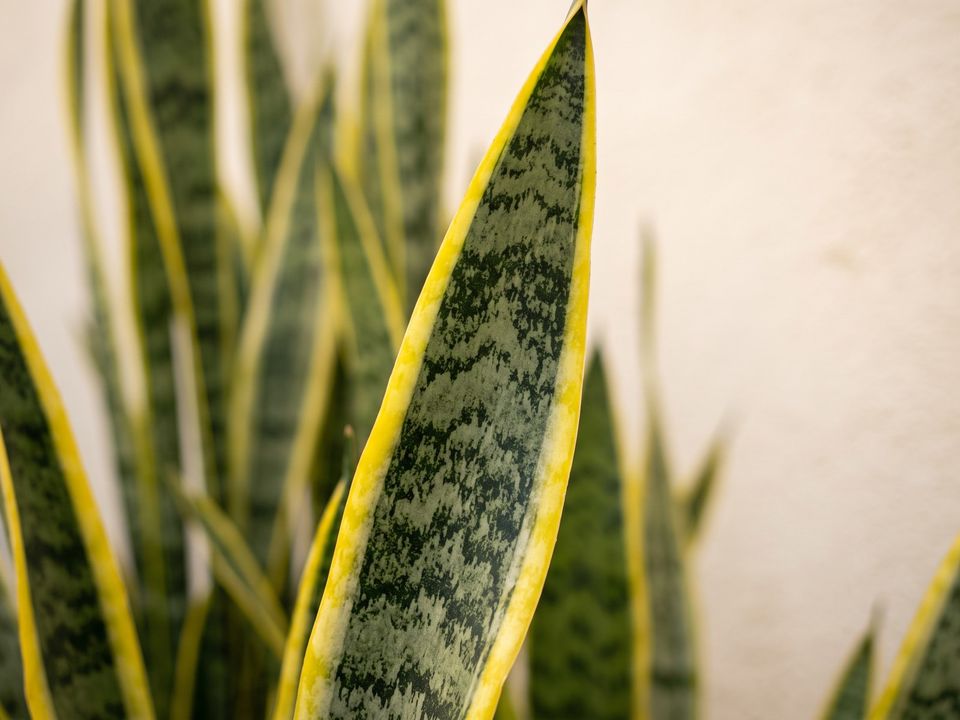
Banded leaves stand up straight like swords. Shrugs off dim corners and dry spells, and is very hard to kill.
Goes home in its plastic nursery pot
Pay PILF, show the screen, take it home
Not available right now. See what’s at Beanokio Cafe →


Care
: Dim to part sun
Dim hall or sunny sill; shield it from afternoon sun
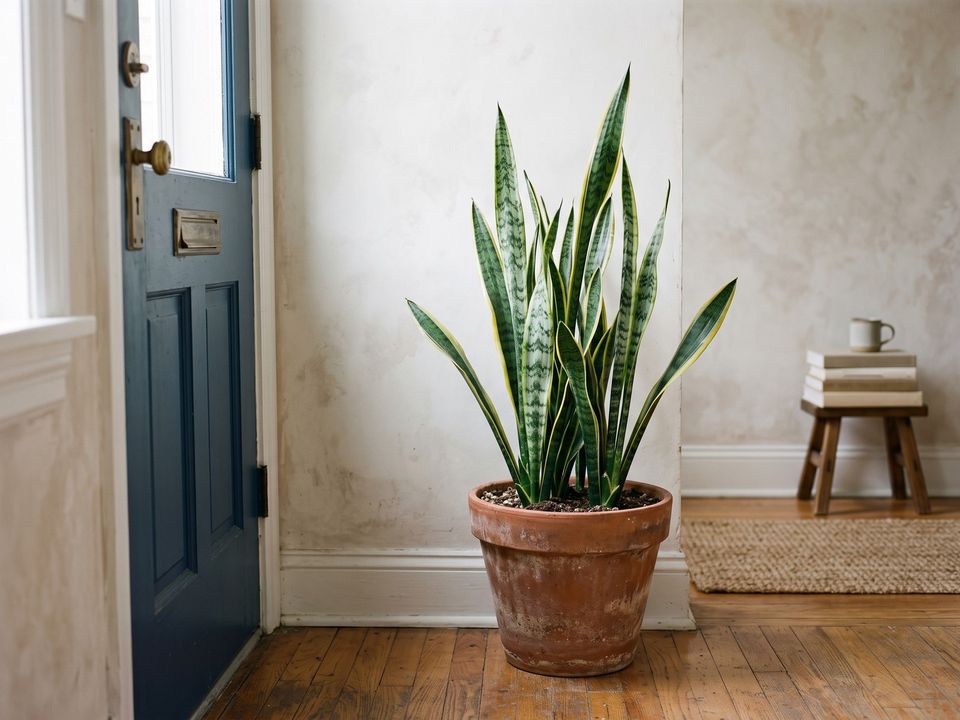
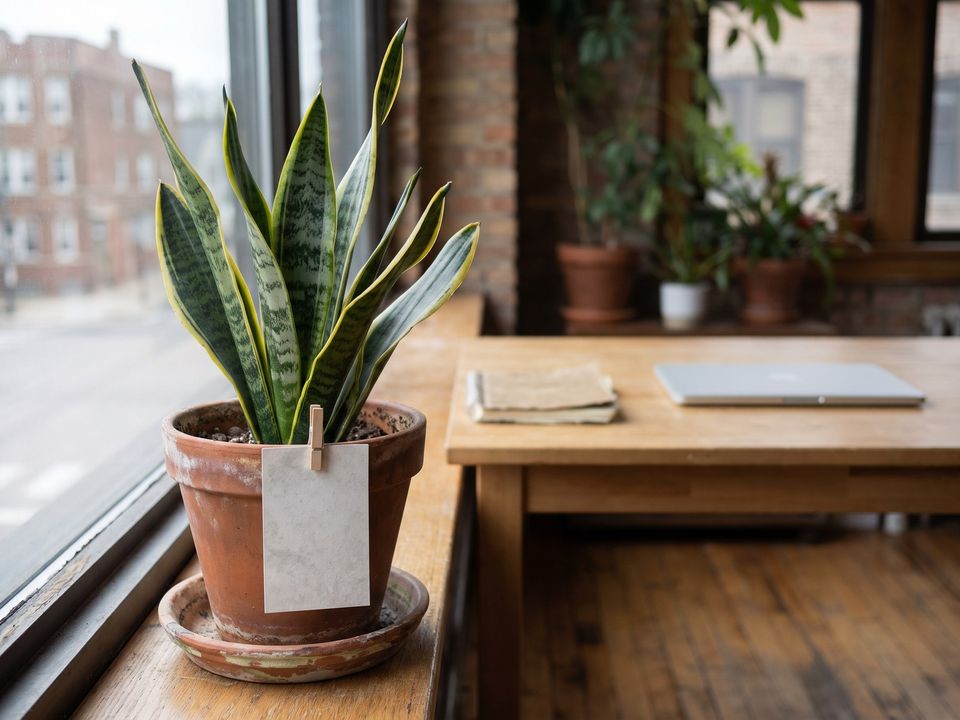
The rare low-light plant that also takes real sun: a windowless hallway works, and so does an east window’s morning sun, its favorite. At a west window, a step back shields it from strong afternoon sun.
Light
Where it sits and what sun touches it.
- Dim shadeA dark corner or a windowless room; natural light casts no shadow
- Bright shadeBack from the window in a south-, east- or west-facing room, or right by a north-facing one, where only low early or late summer sun reaches it
- Filtered sunBehind a sheer curtain or tinted glass; the sun’s shadows are blurred
- Partial sunIn an east- or west-facing window: up to a few hours of direct sun
- Full sunThe sunniest spot you have, usually a south-facing window, with direct sun 6+ hours a day
: Monthly
The soil dries between drinks; every 1-2 months in winter
Every 2-3 weeks in summer and 1-2 months in winter, the mix drying out between; it’ll forgive you for forgetting far sooner than for fussing. Soggy soil is the one thing that rots it, so when in doubt, wait.
Water
How often, and what the soil does between.
- MonthlyEvery 2-3 weeks in summer and 3-5 in winter; the soil dries all the way between
- 2-3× a monthEvery 7-14 days in summer, longer in winter; the top of the soil dries between
- Weekly+About every 4-8 days in summer; the soil stays lightly damp
: Medium
Upright leaves 2-3 feet tall, filling out over the years
Stiff, upright leaves 2-3 feet tall that take up little floor space; a row of them makes a living screen between a desk and a doorway. New shoots come up around it, so it fills out its pot with time.
Scale
How much room it usually takes indoors.
Size
- TinyUnder 6 inches tall or wide; for a desk or a sill
- Small6 inches to 1.5 feet tall or wide; for a shelf or a sill
- Medium1.5 to 3 feet tall or wide; for a table or a stand
- Large3 to 6 feet tall or wide; for the floor
- GiantOver 6 feet tall or wide; a statement in the corner
Shape
- TreeA trunk that branches into a canopy
- CaneBare stalks topped with leaves
- UprightStiff stems or leaves rising straight from the soil
- FountainLeaves or fronds arching out from the center
- BushyA full, rounded mound of leaves
- RosetteLeaves radiating from one low point
- ViningTrails, climbs, or both
Growth
How fast it gets there.
- SlowUnder 6 inches of new growth a year
- Moderate6-12 inches a year, mostly in spring and summer
- FastOver 12 inches a year; it may want trimming or training
: Mildly irritating
Chewing can upset the stomachs of dogs, cats or kids
Chewed, it may give a dog or cat nausea, vomiting or diarrhea; the ASPCA lists it as toxic to both for its saponins. For kids the risk is minor, though the sap can irritate skin.
Safety
What happens and how bad (the worst of dogs, cats and kids).
- Pet & kid safeNothing to worry about
- Mildly irritatingMay irritate the mouth or stomach if chewed, or for some plants, the skin if handled
- Moderately toxicCan cause illness if eaten, though typically not serious or fatal
- Highly toxicCan cause serious illness if eaten, including some reports of death
- Not yet ratedNot clearly rated by our sources; please check with your vet or doctor
For its safety ratings, PILF relies on research and guidance from leading sources, including the ASPCA, Pet Poison Helpline, Merck Veterinary Manual, Poison Control and Children’s Hospital of Philadelphia, and others.
The PILF Matrix
4.9/5
how easy it is to care for
3.8/5
how much it stands out visually
Forever
The ones you’ll grow old with.
“The one that stands tall, whatever you throw at it.”