Snake Plant
Dracaena trifasciata
Formerly Sansevieria trifasciata
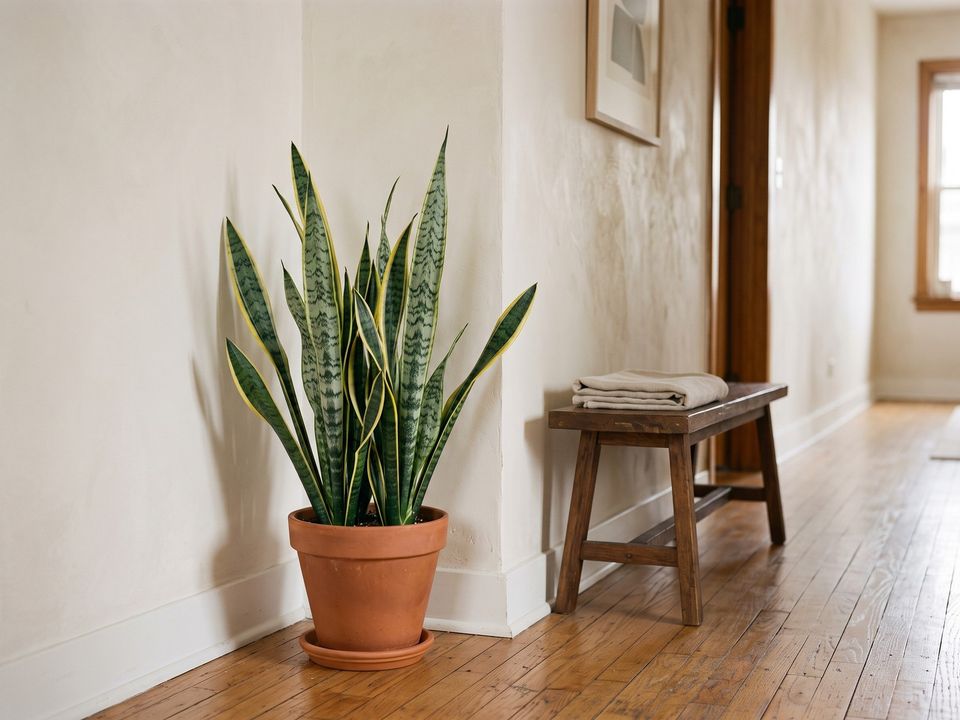
Banded leaves stand up straight like swords. Shrugs off dim corners and dry spells, and is very hard to kill.
Also called mother‑in‑law’s tongue
4.9/5
how easy it is to care for
3.8/5
how much it stands out visually
: Dim to part sun
Dim hall or sunny sill; shield it from afternoon sun
No window? A small grow light does the trick.
The rare low-light plant that also takes real sun: a windowless hallway works, and so does an east window’s morning sun, its favorite. At a west window, a step back shields it from strong afternoon sun.
Its range runs from southern Nigeria to west-central tropical Africa (NC State), and its genus comes from hot, dry habitats (RHS). It’s built to spend slowly, with growth that waits for better days. A plant that spends so little can idle for months in a dim hallway, where a faster plant would starve.
Given the choice, it likes 2-6 hours of sun on its leaves, ideally gentle morning sun (NC State). An east window gives it just that. At a west window, a step back from the glass takes the edge off strong afternoon sun (Missouri Botanical Garden).
In the dimmer spots it simply grows slower, and that’s fine. Give it whatever light you have.
: Monthly
The soil dries between drinks; every 1-2 months in winter
Every 2-3 weeks in summer and 1-2 months in winter, the mix drying out between; it’ll forgive you for forgetting far sooner than for fussing. Soggy soil is the one thing that rots it, so when in doubt, wait.
Aim the spout at the soil around the leaves, never into the crown where the leaves meet, since water left sitting there can rot it (Missouri Botanical Garden, RHS).
It grows from thick rhizomes low in the pot, and those are the first thing standing water reaches, so tip out any that collects in a saucer or cachepot (RHS).
Once the days shorten, it lives off the water banked in its fleshy leaves and barely needs more (RHS); through winter, NC State’s every one to two months is plenty.
Overwatering shows at the base first: a leaf turns soft and mushy where it meets the soil, and can keel over.
Gone for a while? A month is fine; water it the day you leave and it won’t notice you’ve gone.
: Medium
Upright leaves 2-3 feet tall, filling out over the years
Stiff, upright leaves 2-3 feet tall that take up little floor space; a row of them makes a living screen between a desk and a doorway. New shoots come up around it, so it fills out its pot with time.
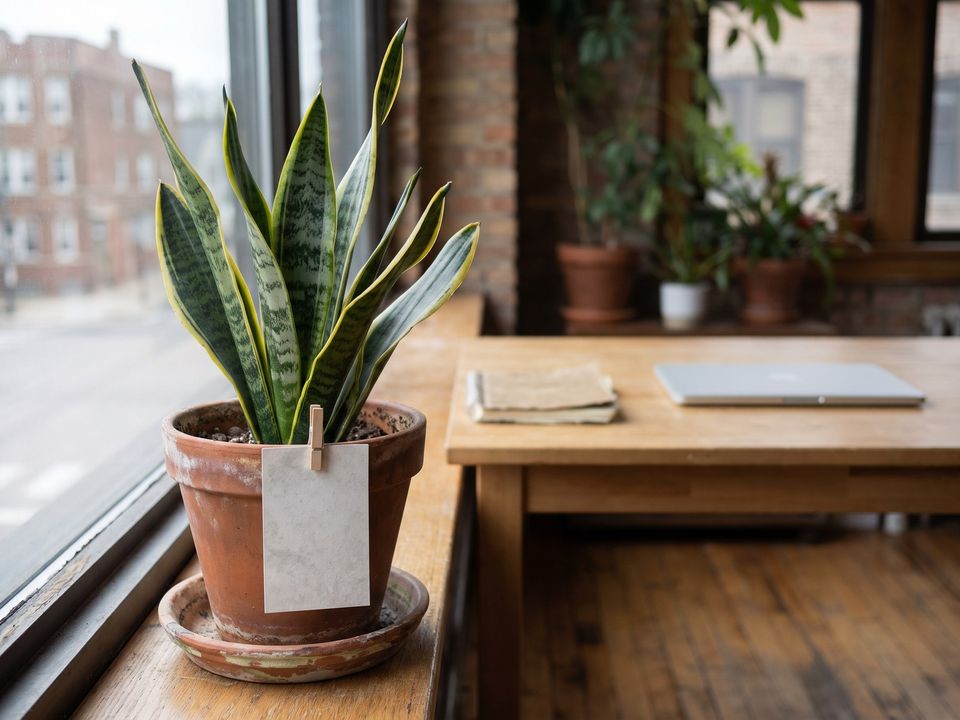
Its leaves rise flat and close together, so it fits the spots nothing else does: the strip beside a window frame, a sill corner, the floor by a sliding door.
Underground, thick rhizomes creep sideways and send up new shoots (Missouri Botanical Garden). In a snug pot they can press hard enough to bulge plastic, a sign it’s ready for more room.
A leaf cut into sections will root, but cuttings from yellow-edged plants usually grow back plain green (UConn Home & Garden Education Center); split the rhizome instead to keep the edge.
: Mildly irritating
Chewing can upset the stomachs of dogs, cats or kids
Chewed, it may give a dog or cat nausea, vomiting or diarrhea; the ASPCA lists it as toxic to both for its saponins. For kids the risk is minor, though the sap can irritate skin.
One vet manual lists red-blood-cell damage, and cats may get dilated pupils; neither is the usual course.
The culprits are saponins, soap-like compounds that can upset a stomach. Most cases are mild and pass on their own (NC State rates it low severity). If vomiting keeps up or anything worries you, a call to your vet, or to Poison Control for a child, is a calm next step.
Its upright leaves sit right at nose height for a curious dog, so a plant stand helps if yours is a chewer. When you trim or divide it, gloves keep the sap off sensitive skin.
- ASPCA: mild for dogs.
- Merck Veterinary Manual: toxic for dogs (rates the whole genus).
- Pet Poison Helpline: mild for dogs.
- ASPCA: mild for cats.
- Merck Veterinary Manual: toxic for cats (rates the whole genus).
- Pet Poison Helpline: mild for cats.
- NC State Extension: mild for kids.
Cats and dogs: Most of the leading sources agree.
Kids: No poison-centre listing; rated from university extension sources.
: Dry OK
60-75°F; dry air is fine
Happiest at 60-75°F, and it shouldn’t sit below 50°F. Humidity can drop to 10% without trouble.
- Temperature
- 60-75°F
: Pest-resistant
Rarely bothered; check the leaf bases now and then
Rarely bothered. Mealybugs can tuck into the leaf bases and the center of the clump, and spider mites, scale or thrips show up once in a while on the blades. A look at the base when you water is plenty.
- Mealybugs
- Spider mites
- Fern scale
- Banded greenhouse thrips
Very few: UF/IFAS lists no serious insect or disease problems. Mealybugs and spider mites turn up now and then; the real danger is rot from soggy soil.
Mealybugs look like bits of white cotton tucked down where the leaves meet. Dab them off with a cotton swab dipped in rubbing alcohol, and look again next week.
Spider mites leave fine, pale speckles and webbing, mostly in warm, dry air. Wipe both sides of each leaf with a damp cloth; if they come back, an insecticidal soap spray is the next step.
Rot is how most snake plants die. A leaf goes soft, yellow and mushy at the soil line, sometimes with a rotten smell, then collapses. Cut off every soft leaf, let the pot dry out completely and water less; if the rhizome under it is mushy too, cut the soft part away and repot what’s firm in dry cactus mix.
Reddish-brown, sunken spots with a yellow rim are a fungal leaf spot, which starts where water sits in the middle of the plant. Water the soil, not the leaves, and cut off the worst ones.
: Little
Feed twice in summer; repot every 4 years or so
Feed it twice in spring and summer, wipe the blades when they look dusty, and that’s most of the year. Every four years or so, repot or divide it in spring, cutting the pups away with a piece of root.
- Feed2× a year
- Clean leaves2× a year
Cactus or succulent mix, or potting mix with perlite added, in a heavy pot with a drainage hole: tall leaves make it top-heavy, especially when the soil is dry.
It likes a snug pot. Repot every five years or so with fresh mix, one size up, or sooner if the rhizomes start bulging the pot; they can crack clay.
Food is optional: an all-purpose fertilizer at half strength in spring, and now and then through summer for a fuller plant; none in winter. Too much nitrogen leaves it easier for cold to damage.
: Suave
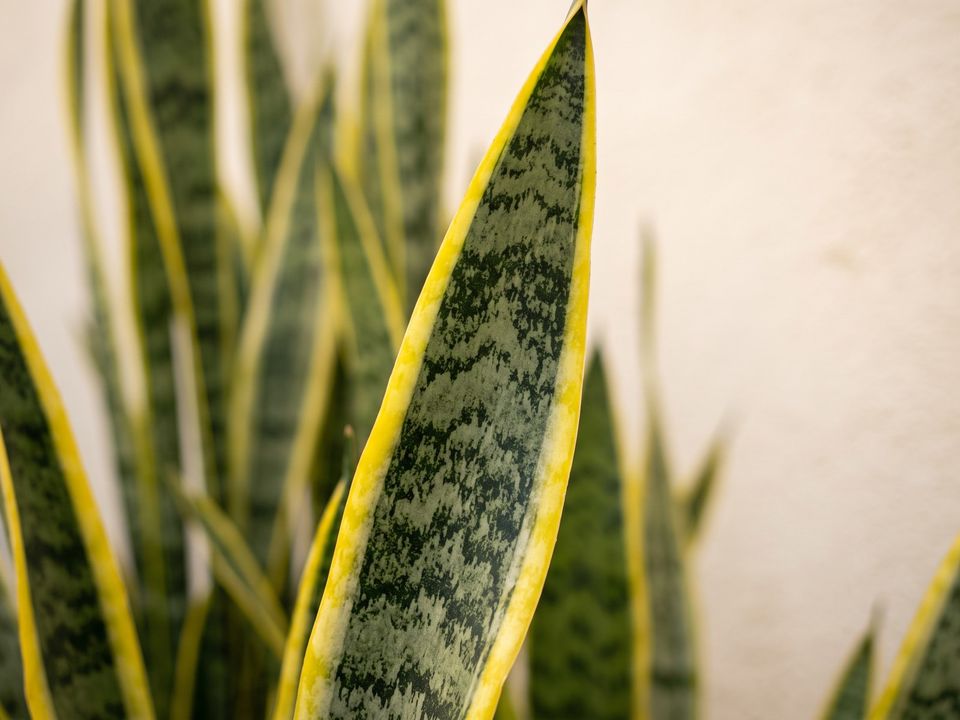
Upright striped blades, crisp and smooth
Stiff blades banded in dark and pale green stand straight up from the soil. The surface is smooth with a slight sheen, and a mature pot fills in enough to hide most of the soil.
Where to find me
Not yet pilferableFun fact
Fine, silky fibers run through the leaves of its wild cousins. In southern Africa, the San twisted them into rope and bowstrings. It’s still nicknamed bowstring hemp.
Designer tips
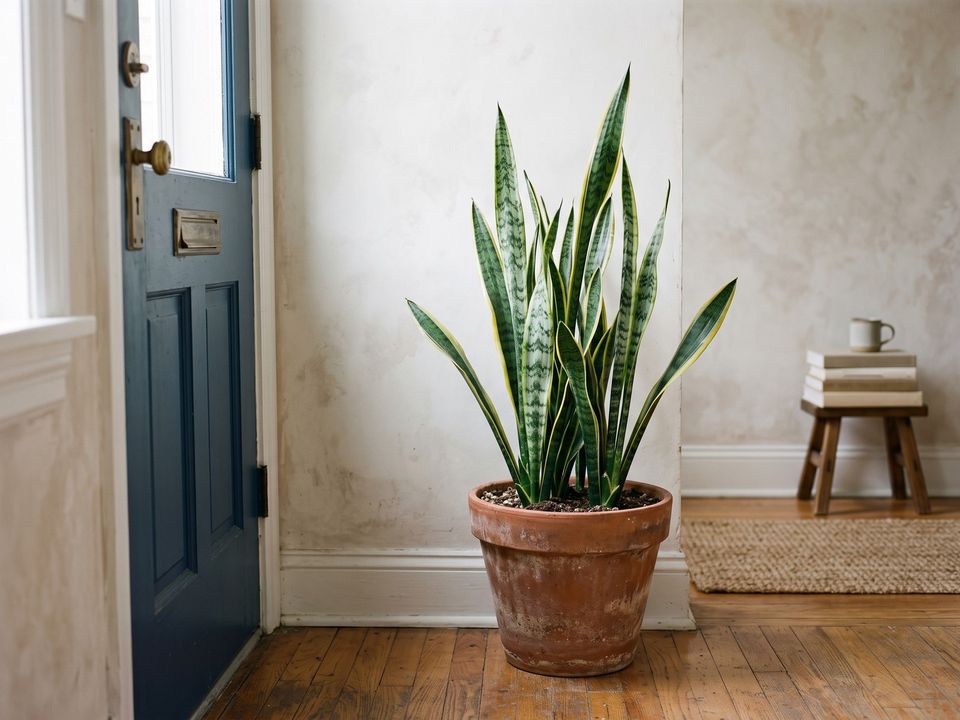
Architectural and modern: one tall, straight shape can hold a whole corner.
Troubleshooting
A leaf went soft and mushy at the base
Too much water: it’s rotting. Cut the soft leaf off at the soil, let the pot dry out completely and water less often from now on; the rest of the plant is often fine.
Why are the leaves turning yellow?
Most often too much water: soggy soil rots the roots and the leaves yellow from the base up. Let the soil dry out completely before the next watering, and cut off any leaf that’s yellow and soft at the soil.
Why are the leaves flopping over?
Usually soggy soil: when the roots rot, the leaves yellow and collapse, so let the soil dry right out. A leaf that has already folded won’t straighten, so cut it off at the soil and let a new one fill in.
See all 10
The leaves are wrinkled and curling in
It’s thirsty, at last. The thick leaves store water, and wrinkling means the store has run low; give it a good soak, let it drain, and go back to its usual schedule.
Can it live in a room with no window?
For a long while, if the lights are on all day, though it barely grows. A spell near a window now and then helps, and it needs even less water while it’s in the dim.
Why are there pale, soggy patches on the leaves?
Cold, most likely, even if it was weeks ago: UF/IFAS notes chilled leaves show whitish, water-soaked patches one to four weeks later. Keep it away from cold windows and drafts, and trim any leaf that turns mushy.
My dog or cat chewed a leaf
Probably not much trouble: it’s mildly irritating, and the ASPCA lists nausea, vomiting or diarrhea from its saponins. If it keeps up or your pet seems unwell, call your vet or the ASPCA Animal Poison Control Center at (888) 426-4435.
The pot is bulging or cracking
The rhizomes have filled it, your sign to repot or divide it in spring. A plastic pot set inside a heavier outer pot saves the next one.
Does it flower?
Rarely, indoors. An older plant in a bright spot may send up a stalk of small, creamy flowers, sticky and fragrant, often sweetest in the evening.
Can it go outside for the summer?
Yes, in shade or morning sun; strong afternoon sun can burn it after a life indoors. Keep it where rain won’t leave the pot soggy, and bring it in before fall nights turn cold (it wants to stay above 50°F).
Propagation
Division is the easy way, and the only way to keep a yellow-edged one’s yellow edges.
When you repot, cut the thick rhizome between clumps so each piece has leaves and roots of its own, and pot each one up.
Leaf cuttings work too, slowly. Cut a leaf into sections and push each one, bottom end down, about an inch into damp mix. In a warm room they root in 4-6 weeks, and a first new leaf follows three to four months later; from a yellow-edged leaf, it usually comes up without the yellow.
The PILF Matrix
4.9/5
how easy it is to care for
3.8/5
how much it stands out visually
Forever
The ones you’ll grow old with.
“The one that stands tall, whatever you throw at it.”


How easy it is to care for. Built from light, water, air, pests and upkeep.
Rated 1-5, with 5 being easiest.
How much it stands out visually. Built from its scale (size, shape, growth) and its look (color and flowers, shine, fullness).
Rated 1-5, with 5 being highest presence.
Where it sits and what sun touches it.
- Dim shadeA dark corner or a windowless room; natural light casts no shadow
- Bright shadeBack from the window in a south-, east- or west-facing room, or right by a north-facing one, where only low early or late summer sun reaches it
- Filtered sunBehind a sheer curtain or tinted glass; the sun’s shadows are blurred
- Partial sunIn an east- or west-facing window: up to a few hours of direct sun
- Full sunThe sunniest spot you have, usually a south-facing window, with direct sun 6+ hours a day
How often, and what the soil does between.
- MonthlyEvery 2-3 weeks in summer and 3-5 in winter; the soil dries all the way between
- 2-3× a monthEvery 7-14 days in summer, longer in winter; the top of the soil dries between
- Weekly+About every 4-8 days in summer; the soil stays lightly damp
How much room it usually takes indoors.
Size
- TinyUnder 6 inches tall or wide; for a desk or a sill
- Small6 inches to 1.5 feet tall or wide; for a shelf or a sill
- Medium1.5 to 3 feet tall or wide; for a table or a stand
- Large3 to 6 feet tall or wide; for the floor
- GiantOver 6 feet tall or wide; a statement in the corner
Shape
- TreeA trunk that branches into a canopy
- CaneBare stalks topped with leaves
- UprightStiff stems or leaves rising straight from the soil
- FountainLeaves or fronds arching out from the center
- BushyA full, rounded mound of leaves
- RosetteLeaves radiating from one low point
- ViningTrails, climbs, or both
Growth
How fast it gets there.
- SlowUnder 6 inches of new growth a year
- Moderate6-12 inches a year, mostly in spring and summer
- FastOver 12 inches a year; it may want trimming or training
What happens and how bad (the worst of dogs, cats and kids).
- Pet & kid safeNothing to worry about
- Mildly irritatingMay irritate the mouth or stomach if chewed, or for some plants, the skin if handled
- Moderately toxicCan cause illness if eaten, though typically not serious or fatal
- Highly toxicCan cause serious illness if eaten, including some reports of death
- Not yet ratedNot clearly rated by our sources; please check with your vet or doctor
For its safety ratings, PILF relies on research and guidance from leading sources, including the ASPCA, Pet Poison Helpline, Merck Veterinary Manual, Poison Control and Children’s Hospital of Philadelphia, and others.
The small jobs beyond watering, over a year.
- Little upkeepA few small jobs a year beyond watering, like a feed now and then
- Some upkeepA small job about once a month beyond watering, like feeding or turning it
- More upkeepA small job every couple of weeks beyond watering, like a wipe, a turn or a feed
- Most upkeepA small job most weeks beyond watering, like raising the humidity or misting
- TreeA trunk that branches into a canopy
- CaneBare stalks topped with leaves
- UprightStiff stems or leaves rising straight from the soil
- FountainLeaves or fronds arching out from the center
- BushyA full, rounded mound of leaves
- RosetteLeaves radiating from one low point
- ViningTrails, climbs, or both
How fast it gets there.
- SlowUnder 6 inches of new growth a year
- Moderate6-12 inches a year, mostly in spring and summer
- FastOver 12 inches a year; it may want trimming or training
The temperature and humidity it’s comfortable in.
How dry a room it takes.
- Needs 50%+ humidity
- Fine at 35%
- Fine at 15-20%
The bugs that usually find it, by name.
How often pests find it.
- 5+ regular pests
- 3 regular pests
- Pests are rare
The year’s chores: feeding, pruning, repotting and cleaning.
Chores beyond water (what needs work means).
- Most upkeep
- Some upkeep
- Little upkeep
Its finish, fullness and texture.
Color, pattern and flowers.
- SimpleOne green, one texture, nothing to read
- SuaveA sheen, a stripe or a clean shape that catches the eye up close
- ShowyColor, pattern or blooms you see from across the room
How the leaves catch light.
- Matte
- Satin
- Glossy or waxy
How much it fills its pot.
- Soil shows
- Soil partly hidden
- Leaves hide the soil