Fairy Castle Cactus
Acanthocereus tetragonus 'Fairy Castle'
Formerly Cereus tetragonus
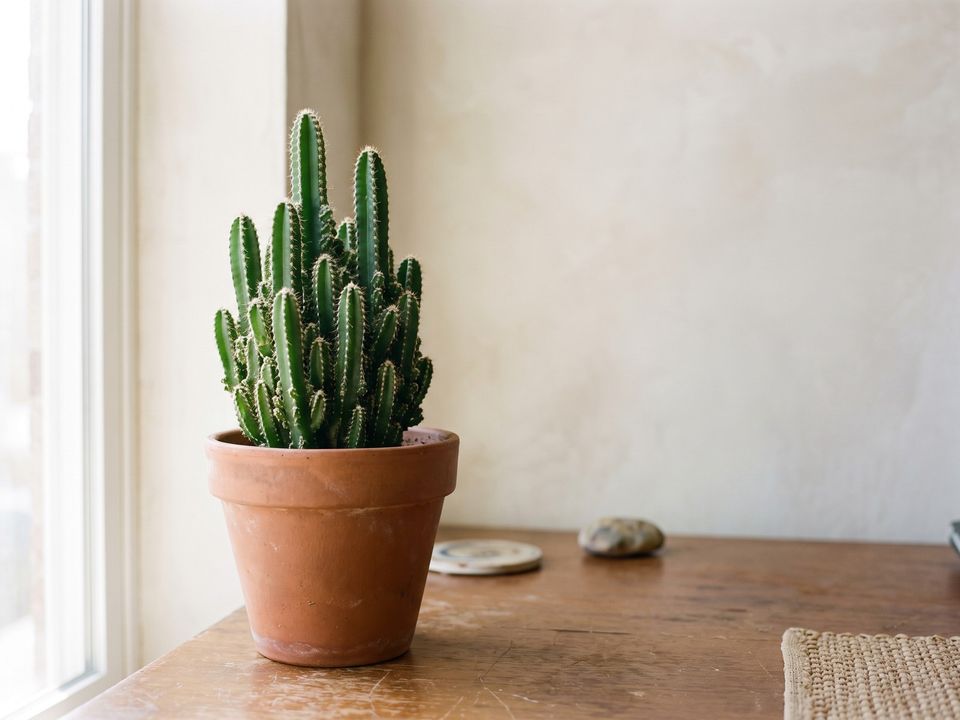
Ribbed green turrets crowd upward like a tiny castle skyline. Give it sun and long dry spells, and it rarely asks for more.
3.8/5
how easy it is to care for
1.5/5
how much it stands out visually
: Shade to full sun
The sunniest sill you have, south or west, all year
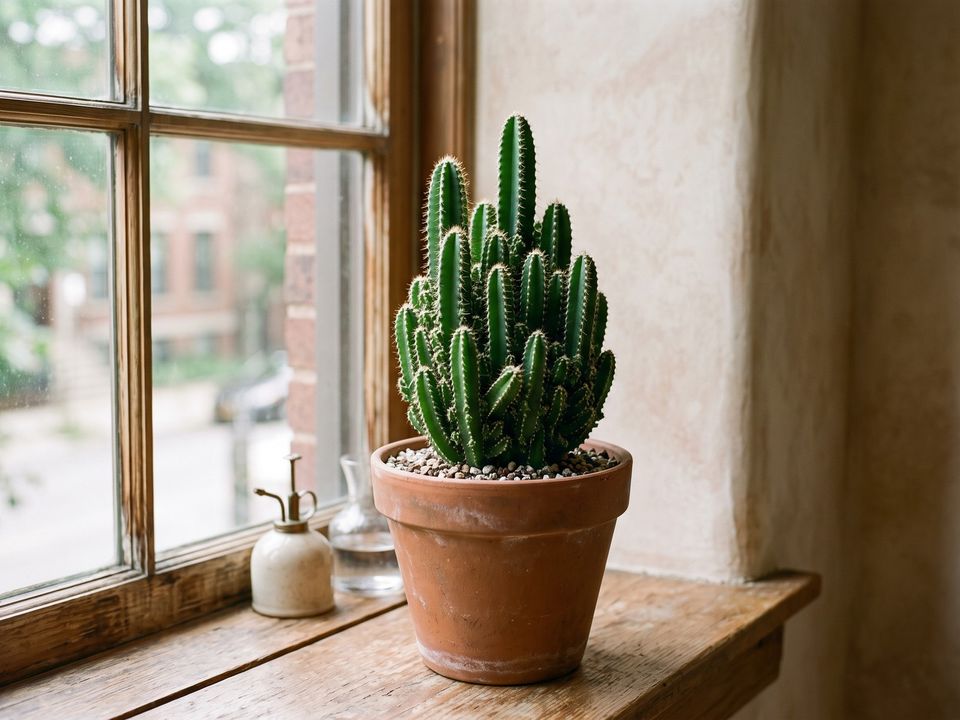
A south or west window, with sun on its ribs all year, keeps its skyline of turrets stout and upright. A little back from the glass in bright light, it carries on, just leaner and leaning toward the sun.
The RHS suggests a sunny sill all year for most houseplant cacti and keeps the softer east and west windows for rainforest kinds. This one’s parent grows in the seasonally dry tropics (Kew), so it belongs with the sun-lovers. A summer outdoors suits it too (RHS); bring it in before frost (UF/IFAS).
Light shows at the tips first. Each turret builds upward from its crown, so a pale, pinched tip, narrower than the stem below, is the sign it wants more; the RHS notes that too little light leaves cacti weak and misshapen. The pinched section won’t fill back in, but new growth above it can come in stout again in a sunnier spot.
Give it the sunniest spot you can spare. In a dimmer one, a few pinched tips are the main cost, and the plant carries on.
: Monthly
Pleated ribs bank water; long droughts don’t bother it
From spring through summer, a soak about every 14-21 days; in winter, stretch it to 3-5 weeks. Water before the pot has dried through and the base may soften and rot; wait too long and it barely notices.
A cactus doesn’t wilt when it’s thirsty, so it gives few hints (Texas A&M); the calendar is a fairer guide than the plant. Its crowded base of stems holds damp close to the soil, so an unglazed clay pot, which dries faster than plastic or glazed (Texas A&M), buys a little margin if you tend to be generous with the can.
Its ribs work like an accordion, filling out after a drink and tightening as it draws on its reserves (Texas A&M). Corky blisters or soft spots point to overwatering (the RHS calls the blistering oedema); a puckered, shriveled look means it’s gone a long while without.
Through a Chicago winter, with the heat on and the light low, it rests; the RHS suggests just enough water to keep it from shriveling.
Gone for a while? A month is fine, and longer in winter; it’s built for dry spells.
: Small
A clump of ribbed turrets, about a foot tall, slow to rise
Crowded, ribbed stems about a foot tall, branching into uneven turrets. Group it with other cacti on a sill or desk for a little skyline; a new turret may take years to rise.
Cacti generally add a few inches a year (UF/IFAS), so this one is slow to reach its foot, and the size you take home is the size you’ll live with for a good while.
A 6-inch pot suits a 12-inch clump: Texas A&M suggests a pot about half as wide as a column cactus is tall. That proportion also keeps a top-heavy cluster from tipping.
A turret that snaps off can rise again as a tower of its own. Let the break dry and callus for several days, then set it shallowly in dry mix; mark which end was up, because a stem piece planted upside down won’t grow (Texas A&M).
Its upright, castle-like outline shows best alone on a narrow sill or a desk corner, where the uneven skyline gets noticed instead of lost among leafy plants.
: Mildly irritating
Spines can prick dogs, cats, or kids who get too close
- DogsMildly irritating
- CatsMildly irritating
- KidsMildly irritating
Its spines are the thing to watch. They can prick a paw, a lip, or a small hand and sting for a while, and then it passes. Neither the ASPCA nor the Pet Poison Helpline lists it as a poison.
Its Mild rating is for the spines, which can prick a paw, a mouth, or a hand; no poison source lists it as toxic.
The small spines on every rib are what earn the rating. A dog or cat that noses, bats, or bites at it may come away with a sore lip or a prickled pad. A child who grabs a stem may get the same in a palm.
For kids, that’s a handling note. The University of California’s toxic-plant list puts cacti in class 4, plants whose thorns and sap can irritate skin.
If a prick doesn’t settle or anything worries you, you can call Poison Control. For a pet, call your vet or the ASPCA Animal Poison Control Center (a fee may apply).
Handle it with folded newspaper or kitchen tongs; UF/IFAS warns that even thick leather gloves may not stop stout spines.
With a crawler or a curious cat in the house, a high, sunny sill or shelf suits it best, clear of tails and swatting paws.
- UC ANR: mild for kids.
Cats and dogs: No top source names it; ASPCA cereus page covers a different species. Spines or thorns: small spines on every rib (inferred from human source).
Kids: UC ANR lists cacti generally as minor toxicity plus dermatitis. Spines and fine hairs can puncture skin. Spines or thorns: small spines on every rib.
: Dry OK
65-85°F; dry air is fine
Happiest at 65-85°F, and it shouldn’t sit below 45°F.
- Temperature
- 65-85°F
: Mealybugs
Mealybugs and scale; check between ribs and stems
Mealybugs tuck into the crevices between ribs and branches, scale clings to the stems, and root mealybugs work below the soil. Spider mites on young growth and fungus gnats in the mix are occasional guests.
- Mealybugs
- Scale
- Root mealybugs
- Spider mites
- Fungus gnats
Few, as long as the soil dries out between soaks. Clemson names too much water as the main problem, then mealybugs, spider mites, and aphids.
Mealybugs look like tufts of white cotton tucked between the ribs and at the base. Wipe them off with a cotton swab dipped in rubbing alcohol, then check again next week.
Scale looks like small brown or white bumps stuck to the stems. Lift a light case off with a fingernail or a swab; Clemson warns a heavy case may mean starting over from a clean cutting.
Spider mites leave a faded, speckled look and fine webbing. Spray the plant off hard with water, then let it dry in the sun; insecticidal soap is the next step.
Rot shows as a column going soft and brown or black at the base. Cut off the healthy top, let the pot dry out, and root the top as a new plant (see Propagation).
: Some
Turn monthly, feed twice March-October, repot in 2-4 years
Give the pot a turn each month so every side gets light. Feed twice between March and October at quarter to half strength. Every 2-4 years in spring, go up 1 inch once roots show through the holes.
- Feed2× a year
- Rotate12× a year
Cactus mix in a pot with a drainage hole, ideally terracotta, which dries faster (Iowa State). Or make your own from equal parts potting mix and coarse sand.
It likes being a little snug. Repot only when it’s crowding its pot, in April as it starts growing, into a pot only slightly bigger: Clemson warns that a big pot stays wet and rots the roots. Wear thick gloves or wrap it in folded newspaper, and wait several days before its first watering.
Food is optional: a cactus fertilizer (low in nitrogen) at half strength once or twice in late spring or summer is all it uses, and none in winter.
: Simple
Plain green ribbed turrets, uneven and crowded
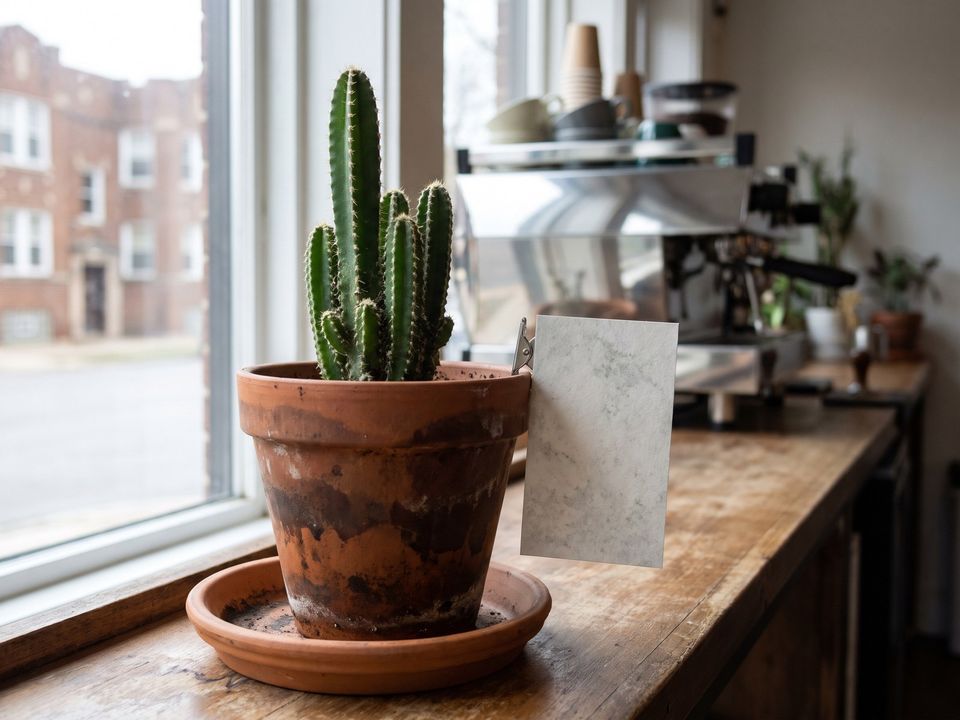
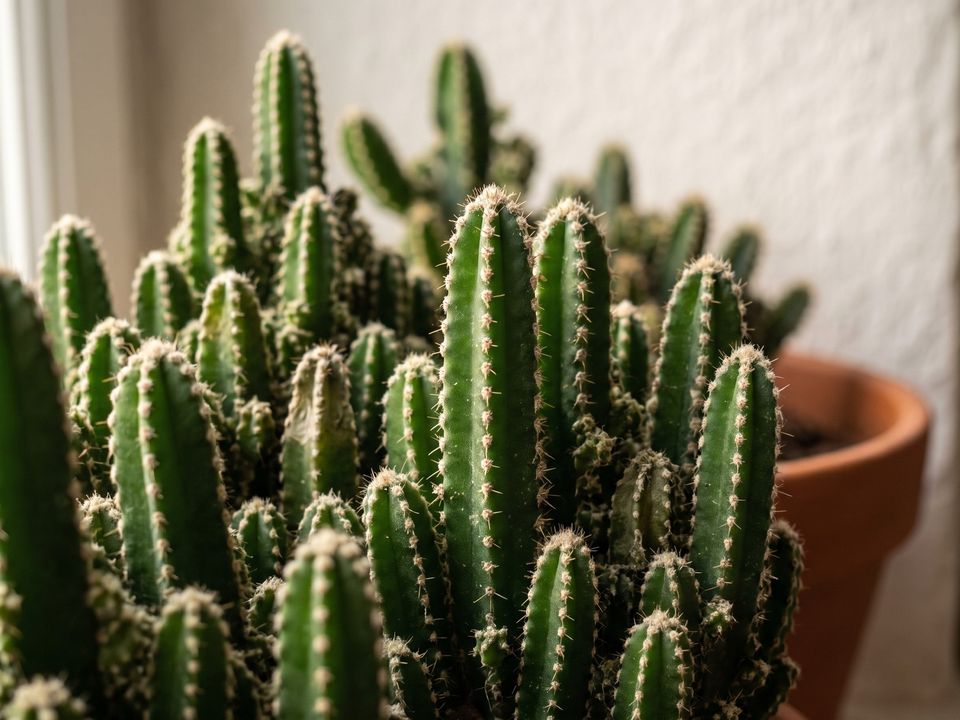
Every turret is the same plain green, with ribs that give the stems a slight texture and sheen. They crowd upward at uneven heights like a skyline, with soil showing in the gaps between them.
Where to find me
Not yet pilferableFun fact
It’s a mutant: a crowded, many-stemmed dwarf of a wild cactus that scrambles and climbs on thin, arching stems and opens white flowers at night.
Designer tips
Small and architectural, it suits a sunny kitchen, a modern desk, or anywhere a bit of sculpture fits.
Troubleshooting
It’s growing thin, pale, and leaning
It wants more light: Iowa State Extension says succulents grow lanky and pale without enough. Ease it into your sunniest window over a couple of weeks; the stretched part stays thin, but new growth can come in stout.
Why are the stems wrinkled or shriveled?
Usually thirst: its ribs store water and pucker as it draws on the reserve, and a good soak likely fills them back out. If the pot is wet and it still shrivels, check the base for rot.
A turret is going soft or black at the base
That’s likely rot, from soil that stayed wet. Cut off the healthy part above it, let the cut dry for several days, and set it in barely damp cactus mix to root; let the old pot dry right out before watering again.
See all 9
How much should I water it in winter?
Barely: a soak every 3-5 weeks, just enough to keep the stems from shriveling, is plenty while it rests through the cold months.
A turret snapped off
It can grow into a new plant. Let the break dry and callus for several days, then set it shallowly in dry mix, right side up, since a stem piece planted upside down won’t grow (Texas A&M).
My dog nosed it and got pricked
It’s mildly irritating, and only for its spines: a sore lip or a pricked pad usually settles soon, and no poison source lists it as toxic. If it doesn’t settle, call your vet or the ASPCA Animal Poison Control Center.
How do I handle it without getting stuck?
Wrap it in a folded strip of newspaper or use kitchen tongs; UF/IFAS warns even thick leather gloves may not stop stout spines. If sap gets on your skin, wash it off with soap and water.
Will it flower?
Rarely indoors, and nothing’s wrong if it never does. A bright bloom on a store-bought one is often glued on.
Can it go outside for the summer?
Yes. Start it in part shade for the first few weeks so the sun doesn’t scorch it (Clemson), and bring it in before fall nights drop below 45°F.
Propagation
Easy, from a single column.
- Wearing gloves, cut or snap off a column at its base and leave it somewhere dry until the cut end has sealed over; a thick one takes longer.
- Then set it upright in barely damp cactus mix in a bright spot.
- Arizona Extension says columnar cacti root in 4-6 weeks in summer; water it normally once it resists a gentle tug.
The PILF Matrix
3.8/5
how easy it is to care for
1.5/5
how much it stands out visually
“The one with a castle and no prince required.”

EASE
3.9/5
how easy it is to care for
PRESENCE
2.9/5
how much it stands out visually
Shade to full sunSoak monthlySmall sizeMildly irritating

EASE
3.9/5
how easy it is to care for
PRESENCE
2.7/5
how much it stands out visually
Dim to brightSoak monthlySmall sizePet & kid safe

EASE
3.9/5
how easy it is to care for
PRESENCE
1.4/5
how much it stands out visually
Shade to part sunSoak 2-3× a monthMedium sizePet & kid safe
Where it sits and what sun touches it.
- Dim shadeA dark corner or a windowless room; natural light casts no shadow
- Bright shadeBack from the window in a south-, east- or west-facing room, or right by a north-facing one, where only low early or late summer sun reaches it
- Filtered sunBehind a sheer curtain or tinted glass; the sun’s shadows are blurred
- Partial sunIn an east- or west-facing window: up to a few hours of direct sun
- Full sunThe sunniest spot you have, usually a south-facing window, with direct sun 6+ hours a day
How often, and what the soil does between.
- MonthlyEvery 2-3 weeks in summer and 3-5 in winter; the soil dries all the way between
- 2-3× a monthEvery 7-14 days in summer, longer in winter; the top of the soil dries between
- Weekly+About every 4-8 days in summer; the soil stays lightly damp
How much room it usually takes indoors.
Size
- TinyUnder 6 inches tall or wide; for a desk or a sill
- Small6 inches to 1.5 feet tall or wide; for a shelf or a sill
- Medium1.5 to 3 feet tall or wide; for a table or a stand
- Large3 to 6 feet tall or wide; for the floor
- GiantOver 6 feet tall or wide; a statement in the corner
Shape
- TreeA trunk that branches into a canopy
- CaneBare stalks topped with leaves
- UprightStiff stems or leaves rising straight from the soil
- FountainLeaves or fronds arching out from the center
- BushyA full, rounded mound of leaves
- RosetteLeaves radiating from one low point
- ViningTrails, climbs, or both
Growth
How fast it gets there.
- SlowUnder 6 inches of new growth a year
- Moderate6-12 inches a year, mostly in spring and summer
- FastOver 12 inches a year; it may want trimming or training
What risks exist for pets and kids.
- Pet & kid safeNothing to worry about
- Mildly irritatingMay irritate the mouth or stomach if chewed, or for some plants, the skin if handled
- Moderately toxicCan cause illness if eaten, though typically not serious or fatal
- DangerousCan cause serious illness if eaten, including some reports of death
- Not yet ratedNot clearly rated by our sources; please check with your vet or doctor
For its safety ratings, PILF relies on research and guidance from leading sources, including the ASPCA, Pet Poison Helpline, Merck Veterinary Manual, Poison Control, and Children’s Hospital of Philadelphia, and others.
The small jobs beyond watering, over a year.
- Little upkeepA few small jobs a year beyond watering, like a feed now and then
- Some upkeepA small job about once a month beyond watering, like feeding or turning it
- More upkeepA small job every couple of weeks beyond watering, like a wipe, a turn, or a feed
- Most upkeepA small job most weeks beyond watering, like raising the humidity or misting
- TreeA trunk that branches into a canopy
- CaneBare stalks topped with leaves
- UprightStiff stems or leaves rising straight from the soil
- FountainLeaves or fronds arching out from the center
- BushyA full, rounded mound of leaves
- RosetteLeaves radiating from one low point
- ViningTrails, climbs, or both
How fast it gets there.
- SlowUnder 6 inches of new growth a year
- Moderate6-12 inches a year, mostly in spring and summer
- FastOver 12 inches a year; it may want trimming or training
The temperature and humidity it’s comfortable in.
How dry a room it takes.
- Needs 50%+ humidity
- Fine at 35% humidity
- Fine at 15-20% humidity
The bugs that usually find it, by name.
How often pests find it.
- 5+ regular pests
- 3 regular pests
- Pests are rare
The year’s chores: feeding, pruning, repotting, and cleaning.
Chores beyond water.
- Most upkeep
- Some upkeep
- Little upkeep
Its finish, fullness, and texture.
Color, pattern, and flowers.
- SimpleOne green, one texture, nothing to read
- SuaveA sheen, a stripe, or a clean shape that catches the eye up close
- ShowyColor, pattern, or blooms you see from across the room
How the leaves catch light.
- Matte
- Satin
- Glossy or waxy
How much it fills its pot.
- Soil shows
- Soil partly hidden
- Leaves hide the soil