Maidenhair Fern
Adiantum raddianum
Also called delta maidenhair
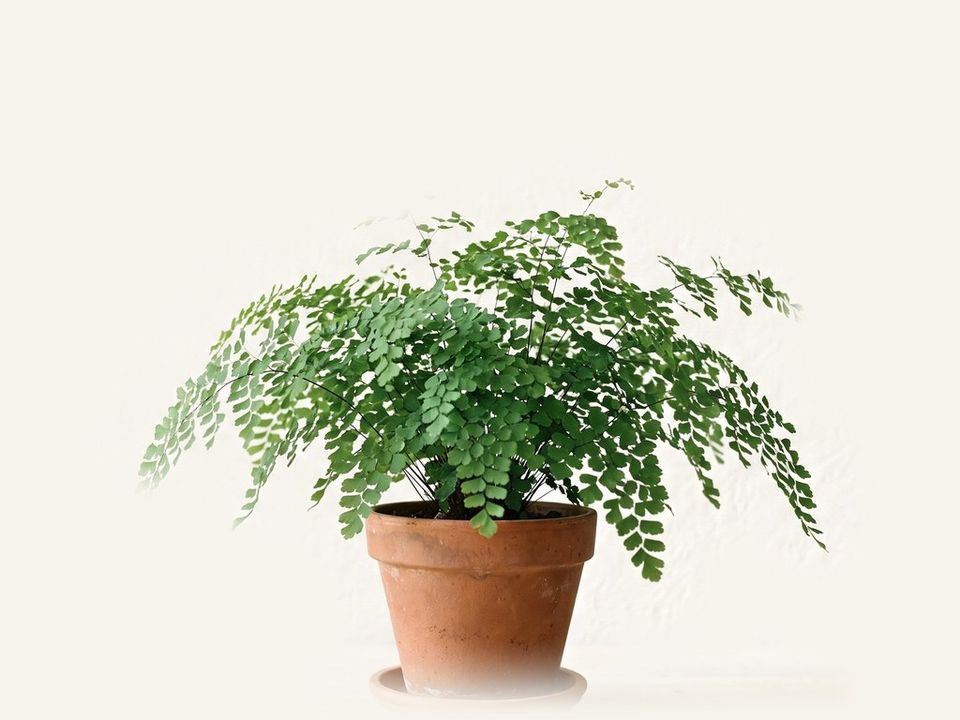
Clouds of tiny, fan-shaped leaflets on wiry black stems in a soft mound. Known for its looks, and for sulking the moment its air or soil dries.
2.3/5
how easy it is to care for
2.7/5
how much it stands out visually
: Bright shade
A few feet from an east or west window, or by a north one
A few feet back from an east or west window suits it, or right beside a north one, where direct sun can’t crisp the fine fronds. A bathroom or kitchen with a window is ideal; deep shade slowly thins it.
Sun landing on the leaves crisps the delicate fronds in no time. Too much shade is no good either: it slowly loses its vigor and thins out.
A bathroom or kitchen with a window is ideal, because the light is soft and the air is damp.
: Weekly+
Every 2-4 days, so the mix stays evenly damp
Every 2-4 days in summer and about every 3-6 in winter, a drink keeps the mix evenly damp. Swinging between bone dry and soggy is what sets it back, and a soggy pot can rot the crown.
Water until the soil is damp through, then empty the saucer after about 15 minutes. While it’s growing, let the top inch of soil dry before the next drink, which takes 2-4 days in most rooms.
What it can’t take is swinging between bone dry and soaked: steady, slight dampness is the whole trick.
Gone for a while? Four days is its limit. For a longer trip, water it well and cover it loosely with a clear plastic bag or a glass dome to hold the moisture in.
: Medium
A soft mound of fronds, 1-2 feet tall and wide
Arching fronds on wiry black stems build a soft mound 1-2 feet tall and wide. Each frond lasts about six months, and now and then the whole plant rests, dying back to the soil and sprouting again weeks later.
Growth is moderate: new fronds keep uncurling from the soil, and each lives about six months before it browns; cut the old ones off at the base. Now and then it rests, dying back to the soil and sprouting again several weeks later.
: Pet & kid safe
Nothing harmful for dogs, cats, or kids
- DogsSafe
- CatsSafe
- KidsSafe
Good news for dogs, cats, and kids alike: nothing harmful here. UConn Extension lists maidenhair ferns among safe houseplants, and UC ANR’s poison-safety list names them safe for kids.
Kids are clearer: maidenhair ferns are on the safe-plant lists from UConn Extension and the University of California’s poison-safety guide.
The ASPCA notes that eating any plant can upset a pet’s stomach. The fronds are fine and fragile, so a curious cat can flatten it fast; a terrarium or a high spot protects both.
- UConn Extension: safe for kids.
Cats and dogs: No vet database lists it; rated from university extension sources.
Kids: No poison-centre listing; rated from university extension sources.
: Humid
Ordinary rooms suit it; dry air is the usual trouble
Comfortable at 50-70°F, away from drafts and radiators. It wants 50% humidity or more, more than most homes have in winter, and dry air is the usual reason it struggles.
- Temperature
- 50-70°F
- Humidity
- 50%+
Bugs rarely bother it; dry air does the harm
Bugs rarely bother it; dry air and uneven watering do far more harm. Mealybugs, like white cotton at the stem bases, or scale, small bumps on the stems, turn up now and then.
Very few pests; dry air and uneven watering do far more damage than bugs. Mealybugs and scale turn up now and then.
Mealybugs look like tufts of white cotton at the base of the stems; scale looks like small bumps stuck to the stems. The fronds are delicate, so dab the pests off gently with a cotton swab dipped in rubbing alcohol, then check again next week.
Soggy soil rots the roots and crown, so empty the saucer and don’t let it stand in water.
: Some
Monthly feeds in season; crisp fronds off at the base
From March through September, feed it about once a month and cut crisped fronds off at the base as they come. Repot or divide it in early spring once roots show at the surface, rhizomes kept at soil level.
- Feeding6× a year
- Cut back crisped fronds6× a year
- Repot or divide1× a year
A potting mix with extra peat or coir and a little sand, so it holds moisture but still drains fast, in a pot with a drainage hole. A plastic or glazed pot stays damp longer than clay.
Repot about every two years, in early spring, once roots show at the surface, one pot size up. Keep the rhizomes at the surface, as they were, not buried.
Food is optional: a standard houseplant fertilizer every two to four weeks from March through September keeps it lush.
: Suave
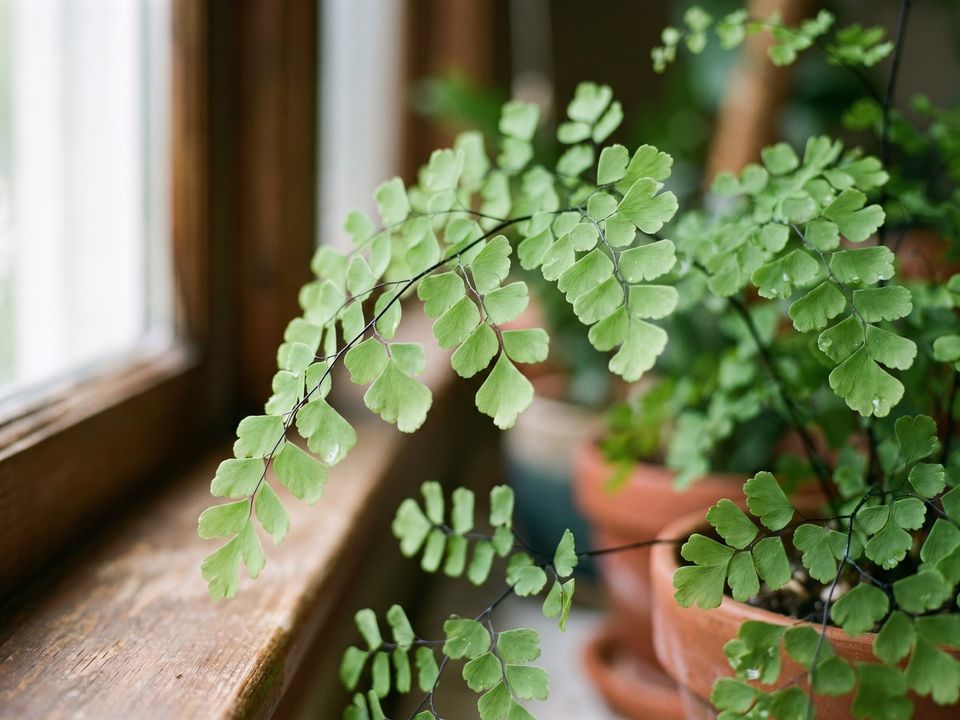
Tiny fan-shaped leaflets on wiry black stems
Clouds of tiny, fan-shaped leaflets in one soft green hang from wiry black stems, on fronds about a foot long. They’re matte and shed water, and the mound grows full enough to hide the soil.
Where to find me
Not at PILF places
Fun fact
The name Adiantum comes from the Greek for 'unwetted': the fronds shed water.
Designer tips
Soft, lacy, and a little romantic, it adds a cloud of fine green to a bathroom, a kitchen, or a terrarium.
Troubleshooting
The fronds are turning brown and crispy
Dry air, or the soil dried out, even once. Cut the crispy fronds off at the base, keep up a drink every 2-4 days, and add humidity if you can; if the roots are alive, new fronds usually follow.
Why are the fronds turning yellow?
Usually uneven watering: bone dry, then soaked, then dry again. Steady, slight dampness and an empty saucer help, and one old frond yellowing now and then is normal, since each lasts about six months.
Does it really need water that often?
Usually, yes: its fine roots and fronds hold very little, so it wants a drink every 2-4 days in summer, far more often than most houseplants. For a trip longer than four days, water it well and cover it loosely with a clear plastic bag or a glass dome.
See all 7
It dried out and all the fronds shriveled
It may not be gone. Cut everything back to the soil and keep it evenly damp somewhere humid: maidenhairs sometimes rest this way, and new fronds can appear several weeks later.
Is a bathroom a good spot?
One of the best, if it has a window: the steam keeps the air damp, which is what it wants most. A windowless bathroom is too dark for it.
Can I grow it in a terrarium?
Yes, a small one does well in a terrarium or under a glass dome, where the air stays humid. Give it a bright spot out of the sun’s reach, and open it now and then for fresh air.
My cat chewed a frond
Nothing harmful: UConn Extension lists maidenhair ferns among safe houseplants. Eating any plant can upset a pet’s stomach, and the fine fronds flatten fast, so a high spot or a terrarium mostly protects the fern.
Propagation
By division, when you repot.
- In early spring, ease it out of the pot and cut the clump into two or three pieces with a clean knife, each with fronds and plenty of roots.
- Pot them at the same depth, keep them evenly damp and humid, and expect them to sulk for a few weeks before new fronds come.
The PILF Matrix
2.3/5
how easy it is to care for
2.7/5
how much it stands out visually
“The one that crisps the minute you look away.”


Rated 1-5, with 5 being easiest
Built from light, water, air, pests, and upkeep.
Rated 1-5, with 5 being easiest
Rated 1-5, with 5 being highest presence
Built from its scale (size, shape, growth) and its look (color and flowers, shine, fullness).
Rated 1-5, with 5 being highest presence
Where it sits and what sun touches it.
- Dim shadeA dark corner or a windowless room; natural light casts no shadow
- Bright shadeBack from the window in a south-, east- or west-facing room, or right by a north-facing one, where only low early or late summer sun reaches it
- Filtered sunBehind a sheer curtain or tinted glass; the sun’s shadows are blurred
- Partial sunIn an east- or west-facing window: up to a few hours of direct sun
- Full sunThe sunniest spot you have, usually a south-facing window, with direct sun 6+ hours a day
How often, and what the soil does between.
- MonthlyEvery 2-3 weeks in summer and 3-5 in winter; the soil dries all the way between
- 2-3× a monthEvery 7-14 days in summer, longer in winter; the top of the soil dries between
- Weekly+About every 4-8 days in summer; the soil stays lightly damp
How much room it usually takes indoors.
Size
- TinyUnder 6 inches tall or wide; for a desk or a sill
- Small6 inches to 1.5 feet tall or wide; for a shelf or a sill
- Medium1.5 to 3 feet tall or wide; for a table or a stand
- Large3 to 6 feet tall or wide; for the floor
- GiantOver 6 feet tall or wide; a statement in the corner
Shape
- TreeA trunk that branches into a canopy
- CaneBare stalks topped with leaves
- UprightStiff stems or leaves rising straight from the soil
- FountainLeaves or fronds arching out from the center
- BushyA full, rounded mound of leaves
- RosetteLeaves radiating from one low point
- ViningTrails, climbs, or both
Growth
How fast it gets there.
- SlowUnder 6 inches of new growth a year
- Moderate6-12 inches a year, mostly in spring and summer
- FastOver 12 inches a year; it may want trimming or training
What risks exist for pets and kids.
- Pet & kid safeNothing to worry about
- Mildly irritatingMay irritate the mouth or stomach if chewed, or for some plants, the skin if handled
- Moderately toxicCan cause illness if eaten, though typically not serious or fatal
- DangerousCan cause serious illness if eaten, including some reports of death
- Not yet ratedNot clearly rated by our sources; please check with your vet or doctor
For its safety ratings, PILF relies on research and guidance from leading sources, including the ASPCA, Pet Poison Helpline, Merck Veterinary Manual, Poison Control, and Children’s Hospital of Philadelphia, and others.
The small jobs beyond watering, over a year.
- Little upkeepA few small jobs a year beyond watering, like a feed now and then
- Some upkeepA small job about once a month beyond watering, like feeding or turning it
- More upkeepA small job every couple of weeks beyond watering, like a wipe, a turn, or a feed
- Most upkeepA small job most weeks beyond watering, like raising the humidity or misting
- TreeA trunk that branches into a canopy
- CaneBare stalks topped with leaves
- UprightStiff stems or leaves rising straight from the soil
- FountainLeaves or fronds arching out from the center
- BushyA full, rounded mound of leaves
- RosetteLeaves radiating from one low point
- ViningTrails, climbs, or both
How fast it gets there.
- SlowUnder 6 inches of new growth a year
- Moderate6-12 inches a year, mostly in spring and summer
- FastOver 12 inches a year; it may want trimming or training
The temperature and humidity it’s comfortable in.
How dry a room it takes.
- Needs 50%+ humidity
- Fine at 35% humidity
- Fine at 15-20% humidity
The bugs that usually find it, by name.
How often pests find it.
- 5+ regular pests
- 3 regular pests
- Pests are rare
The year’s chores: feeding, pruning, repotting, and cleaning.
Chores beyond water (what needs work means).
- Most upkeep
- Some upkeep
- Little upkeep
Its finish, fullness, and texture.
Color, pattern, and flowers.
- SimpleOne green, one texture, nothing to read
- SuaveA sheen, a stripe, or a clean shape that catches the eye up close
- ShowyColor, pattern, or blooms you see from across the room
How the leaves catch light.
- Matte
- Satin
- Glossy or waxy
How much it fills its pot.
- Soil shows
- Soil partly hidden
- Leaves hide the soil