Christmas Cactus
Schlumbergera × buckleyi
Bright blooms dangle like earrings from flat, scalloped stems each winter. Gentle on pets; picky about its fall nights.
2.8/5
how easy it is to care for
3.2/5
how much it stands out visually
: Shade to filtered
A bright room out of the sun; dimmer spots, fewer buds
Near a window but shielded from direct rays, it sets the most buds. Farther back, where the light is softer, it still grows, just with fewer flowers come winter.
In the wild it perches on branches in the mountain forests of southeastern Brazil, 3,000-5,000 feet up, where conditions stay cool, shaded and humid (University of Wisconsin Extension; UC Master Gardeners). Indoors, an east-facing windowsill is usually ideal (RHS), and a few hours of morning sun suits it, though not much more (University of Wisconsin Extension).
In fall, darkness matters as much as light. Once nights reach 13 hours, around October, it needs each one unbroken to set buds (NC State; Pender County Extension). NC State lists lamplight in autumn among the things that can stop flowering, so a spare room or a sill nobody lights after sunset is worth the move.
Give it bright days, and let its nights stay truly dark.
: 2-3× a month
The top dries a bit between drinks; moist once buds set
About every 1-2 weeks in summer and every 10-14 days in winter, with the soil nearly dry between; once buds set, keep it evenly moist. A forest cactus, it drinks more than its desert cousins.
In the wild its roots sit in pockets of decaying leaves caught between tree branches, soaking up rainwater (NC State Extension). Indoors, NC State suggests an airy mix with peat moss, sand and perlite, and a pot that feels light when you lift it is a fair sign it’s ready (Pender County Extension).
From mid-September, ease off a little while the buds develop (NC State). Once they show at the stem tips, keep the routine steady: a hard dry spell, or a swing below 50°F or above 90°F, can make it drop buds before they open (Pender County Extension). The plant survives a lost season of buds; you’d just miss that year’s flowers.
Once buds appear, leave it where it is. Being moved, or parked by a radiator or a drafty door, is a common trigger for bud drop (NC State; University of Minnesota Extension).
Gone for a while? Two weeks is fine if it’s watered the day you leave, but not while it’s in bud: a dry spell then makes it drop them.
: Small
A mound that grows steadily to 6-12 inches, 1-2 feet wide
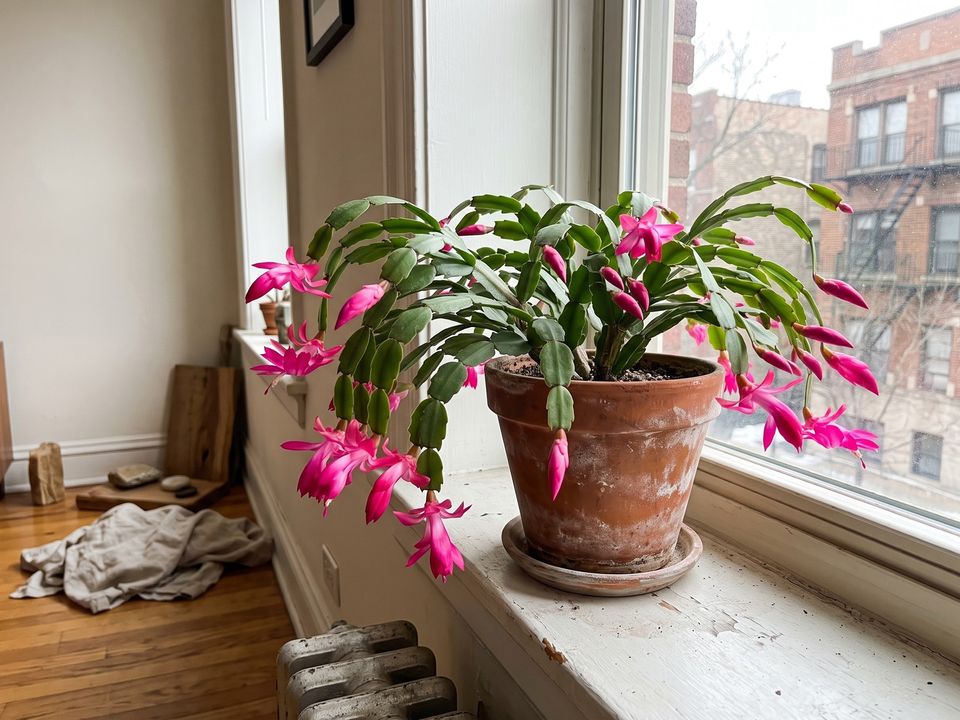
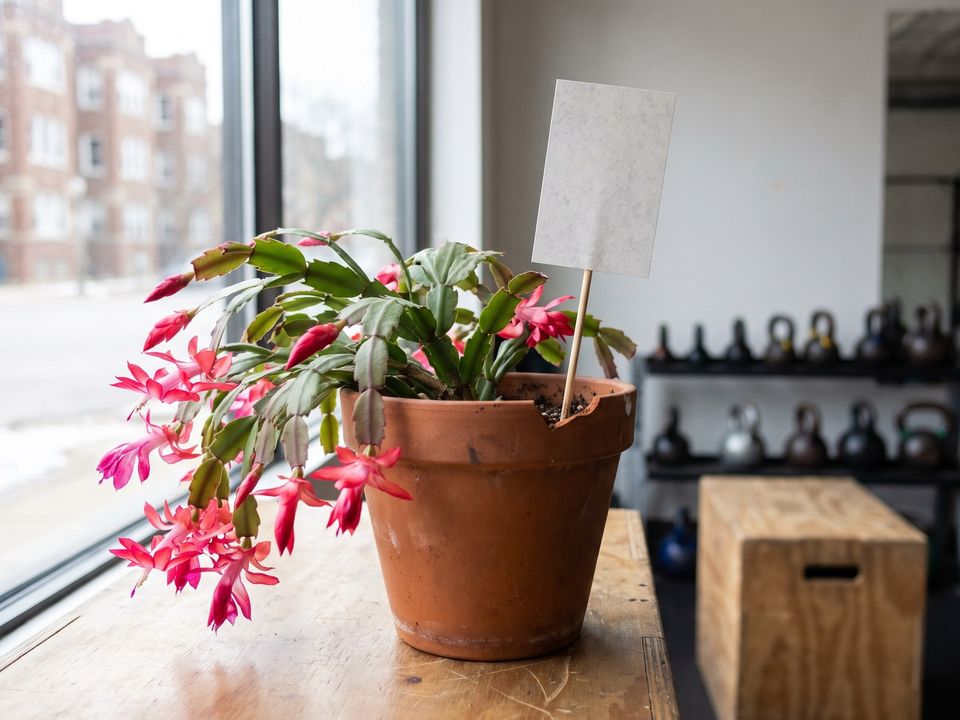
Chains of flat, scalloped segments rise and arch over the rim, about a foot tall and up to twice as wide. Give it a side table or wide sill; after it blooms, twist off a segment or two at the joint to keep it bushy.
Each segment runs about 2.5 inches long (NC State), and new ones grow from the tips of the last, the same place its flowers form.
Keep it a little snug in its pot heading into fall, when it sets buds; Pender County Extension notes it tends to bloom best pot-bound, so a container that looks slightly small is fine.
NC State calls its habit pendulous, and that weeping shape earns it a hanging basket or a tall plant stand by an east window, where the flowers hang down toward you.
: Pet & kid safe
Nothing to worry about for dogs, cats, or kids
- DogsSafe
- CatsSafe
- KidsSafe
The ASPCA lists it as non-toxic to dogs and cats, and NC State calls it safe for homes with pets or children. Its stems are smooth and spineless, too, so there’s nothing to prick small hands.
Among holiday gift plants, it’s one of the gentle ones: Penn State Extension files it on the nice side of the list. It’s considered non-toxic, with no serious trouble expected (Pet Poison Helpline). A pet that eats some may still vomit or have diarrhea for a while, and that usually passes within hours.
If your pet seems unwell afterward, or the upset doesn’t settle, call your vet or the ASPCA Animal Poison Control Center (a fee may apply).
If you have a cat that bats at anything dangling, a high shelf or a hanging basket keeps the flowers intact and the stems away from a curious mouth.
Cats and dogs: The ASPCA lists it as non-toxic.
Kids: CHOP and Poison Control list it as non-poisonous.
: Dry OK
70-80°F; average humidity is fine
Happiest at 70-80°F, and it shouldn’t sit below 50°F. It likes 50-60% humidity and gets by at 25%.
- Temperature
- 70-80°F
- Humidity
- 50-60%
: Mealybugs
Mealybugs and scale; check flowers and stem segments
Mealybugs and scale are the ones to watch for, and both settle on the flowers and stem segments. Red spider mites sit on the segments, and aphids can turn up anywhere. Look closely at each joint.
- Mealybugs
- Scale
- Red spider mites
- Aphids
Not many. Mealybugs, scale, spider mites, and fungus gnats turn up now and then, and root rot if the soil stays wet.
Mealybugs look like tufts of white cotton in the joints between segments; scale looks like small brown bumps, sometimes sticky. Wipe them off with a cotton swab dipped in rubbing alcohol (a fingernail lifts scale), then check again next week.
Spider mites leave fine webbing and pale speckles: rinse the plant in the shower, and if they come back, spray it with insecticidal soap. Fungus gnats are tiny flies hovering over soil that stays wet; let the top of the soil dry between soaks (7-10 days in most rooms) and they die off.
Root rot is the one to watch: stems go limp and shriveled even though the soil is wet, and segments start to drop. Let it dry out, empty the saucer, and water less often; if the roots are dark and mushy, start new plants from healthy segments (see Propagation).
: Little
Feed 3× in summer, pinch in September, prune after bloom
Feed monthly from June to August at half strength. Pinch off tip segments under 1 cm at the end of September, then prune at the joints after flowering. Repot in late March every 2-5 years, one size up.
- Feed3× a year
- Pinch1× a year
- Rebloom routine1× a year
- Prune1× a year
A pot with a drainage hole, a little on the snug side, and a mix that drains fast: ordinary potting mix with a good share of perlite. In the wild it grows on trees, not in soil, so its roots need air.
Repot about every three years, in spring, just one pot size up; it blooms best a little pot-bound.
Food helps it bloom: a houseplant fertilizer at half strength, once a month from spring through summer (UMN and Clemson Extension).
: Suave
Scalloped green stems, glossy, filling the pot
Flat green segments with scalloped edges link into chains that arch over the rim. The surface has a gentle gloss, and the stems pile up so densely that the pot’s soil disappears.
Where to find me
Not yet pilferableFun fact
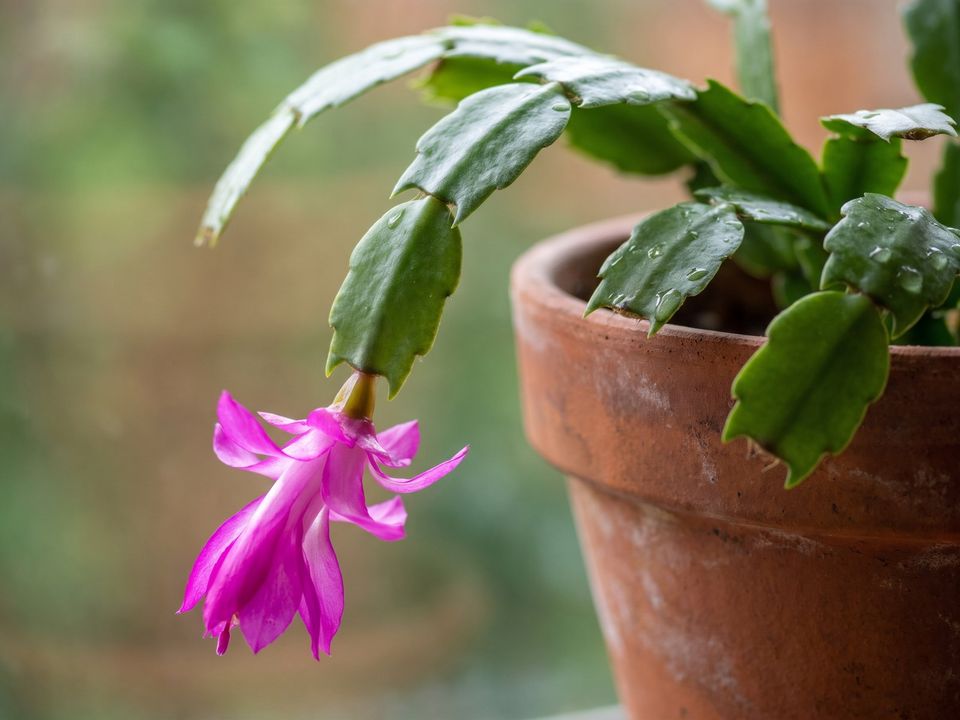
Most 'Christmas cacti' sold are really Thanksgiving cacti. Check the stem edges: pointed teeth like a crab claw mean Thanksgiving; smooth scallops mean Christmas.
Designer tips
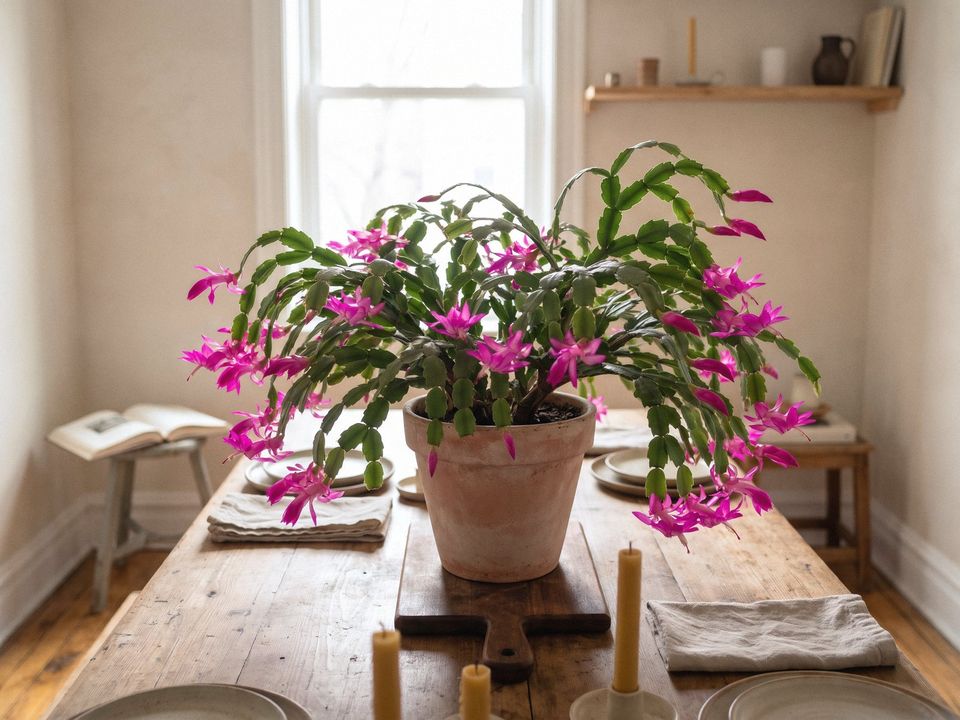
A living heirloom: flat, jointed stems that spill over the pot, and a burst of color in the darkest weeks of the year.
Troubleshooting
It won’t bloom
It likely needs long, cool nights first. From late September, keep it where no lamp goes on after dark, with nights in the upper 50s or low 60s, for about six weeks (UMN and Iowa State Extension). A warm room or an evening lamp is the usual culprit.
The buds fell off before they opened
A sudden change, most often: a move, a draft, a heat vent, or soil that went dry (Clemson and Iowa State Extension). Pick its spot before buds form and leave it there until they open; it also sheds a few on its own when it has set more than it can carry.
Why are the stems limp and wrinkled?
Likely thirst if it’s been a couple of weeks since its last drink; a good soak usually firms the stems up within a day or two. If the soil has stayed wet, the roots may be rotting, so let it dry out, and cuttings from healthy segments can start a new plant.
See all 9
The stems are turning pale and yellowish
Too much sun, likely: bright summer sun bleaches the segments (Clemson and NC State Extension). Move it a few feet back from the window or behind a sheer curtain, and the new growth comes in green.
Is it a Christmas cactus or a Thanksgiving cactus?
Look at the segment edges. Pointed teeth mean Thanksgiving cactus, blooming from mid-November; rounded scallops mean Christmas cactus, blooming from late November into February. Iowa State notes most sold as Christmas cactus are really Thanksgiving cactus or hybrids, and the care is the same.
White fluff in the joints between segments
Likely mealybugs, which look like tufts of white cotton. Wipe them off with a cotton swab dipped in rubbing alcohol, then check again next week.
My cat keeps chewing it
The cat’s fine: the ASPCA lists it as non-toxic to cats and dogs, though eating any plant can upset a pet’s stomach. The plant gets the worst of it, so hang it up out of reach if you want it to stay full.
Can it go outside for the summer?
Yes, in part shade, hanging from a tree branch or on a shaded porch (UW-Madison Extension). Keep the pot off the ground, since slugs and snails love it, and bring it in before nights drop below 55°F; a few cool early-fall nights outside can even help it set buds (UMN).
How long do they live?
Decades, easily: UMN Extension says they can live over 100 years, and they’re often passed down in families. Repot it every few years and it keeps going.
Propagation
Yes, easily, from a few stem segments.
- Twist off a piece two to five segments long at a joint (the bits you pinch off after it blooms work well).
- Let the cut end dry for a day or two, then push it about an inch deep into barely damp perlite or potting mix.
- It roots in three to eight weeks (Clemson); pot several pieces together for a fuller plant.
The PILF Matrix
2.8/5
how easy it is to care for
3.2/5
how much it stands out visually
“The one who needs its beauty sleep before the big night.”


- zygocactus
Rated 1-5, with 5 being easiest
Built from light, water, air, pests, and upkeep.
Rated 1-5, with 5 being easiest
Rated 1-5, with 5 being highest presence
Built from its scale (size, shape, growth) and its look (color and flowers, shine, fullness).
Rated 1-5, with 5 being highest presence
Where it sits and what sun touches it.
- Dim shadeA dark corner or a windowless room; natural light casts no shadow
- Bright shadeBack from the window in a south-, east- or west-facing room, or right by a north-facing one, where only low early or late summer sun reaches it
- Filtered sunBehind a sheer curtain or tinted glass; the sun’s shadows are blurred
- Partial sunIn an east- or west-facing window: up to a few hours of direct sun
- Full sunThe sunniest spot you have, usually a south-facing window, with direct sun 6+ hours a day
How often, and what the soil does between.
- MonthlyEvery 2-3 weeks in summer and 3-5 in winter; the soil dries all the way between
- 2-3× a monthEvery 7-14 days in summer, longer in winter; the top of the soil dries between
- Weekly+About every 4-8 days in summer; the soil stays lightly damp
How much room it usually takes indoors.
Size
- TinyUnder 6 inches tall or wide; for a desk or a sill
- Small6 inches to 1.5 feet tall or wide; for a shelf or a sill
- Medium1.5 to 3 feet tall or wide; for a table or a stand
- Large3 to 6 feet tall or wide; for the floor
- GiantOver 6 feet tall or wide; a statement in the corner
Shape
- TreeA trunk that branches into a canopy
- CaneBare stalks topped with leaves
- UprightStiff stems or leaves rising straight from the soil
- FountainLeaves or fronds arching out from the center
- BushyA full, rounded mound of leaves
- RosetteLeaves radiating from one low point
- ViningTrails, climbs, or both
Growth
How fast it gets there.
- SlowUnder 6 inches of new growth a year
- Moderate6-12 inches a year, mostly in spring and summer
- FastOver 12 inches a year; it may want trimming or training
What risks exist for pets and kids.
- Pet & kid safeNothing to worry about
- Mildly irritatingMay irritate the mouth or stomach if chewed, or for some plants, the skin if handled
- Moderately toxicCan cause illness if eaten, though typically not serious or fatal
- DangerousCan cause serious illness if eaten, including some reports of death
- Not yet ratedNot clearly rated by our sources; please check with your vet or doctor
For its safety ratings, PILF relies on research and guidance from leading sources, including the ASPCA, Pet Poison Helpline, Merck Veterinary Manual, Poison Control, and Children’s Hospital of Philadelphia, and others.
The small jobs beyond watering, over a year.
- Little upkeepA few small jobs a year beyond watering, like a feed now and then
- Some upkeepA small job about once a month beyond watering, like feeding or turning it
- More upkeepA small job every couple of weeks beyond watering, like a wipe, a turn, or a feed
- Most upkeepA small job most weeks beyond watering, like raising the humidity or misting
- TreeA trunk that branches into a canopy
- CaneBare stalks topped with leaves
- UprightStiff stems or leaves rising straight from the soil
- FountainLeaves or fronds arching out from the center
- BushyA full, rounded mound of leaves
- RosetteLeaves radiating from one low point
- ViningTrails, climbs, or both
How fast it gets there.
- SlowUnder 6 inches of new growth a year
- Moderate6-12 inches a year, mostly in spring and summer
- FastOver 12 inches a year; it may want trimming or training
The temperature and humidity it’s comfortable in.
How dry a room it takes.
- Needs 50%+ humidity
- Fine at 35% humidity
- Fine at 15-20% humidity
The bugs that usually find it, by name.
How often pests find it.
- 5+ regular pests
- 3 regular pests
- Pests are rare
The year’s chores: feeding, pruning, repotting, and cleaning.
Chores beyond water (what needs work means).
- Most upkeep
- Some upkeep
- Little upkeep
Its finish, fullness, and texture.
Color, pattern, and flowers.
- SimpleOne green, one texture, nothing to read
- SuaveA sheen, a stripe, or a clean shape that catches the eye up close
- ShowyColor, pattern, or blooms you see from across the room
How the leaves catch light.
- Matte
- Satin
- Glossy or waxy
How much it fills its pot.
- Soil shows
- Soil partly hidden
- Leaves hide the soil