English Ivy
Hedera helix
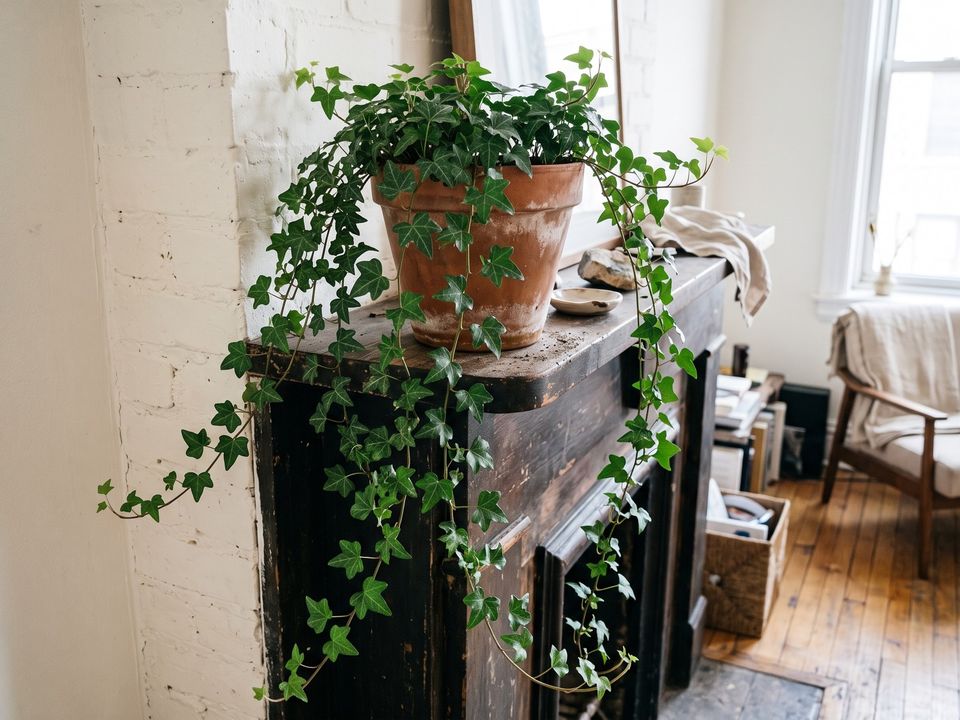
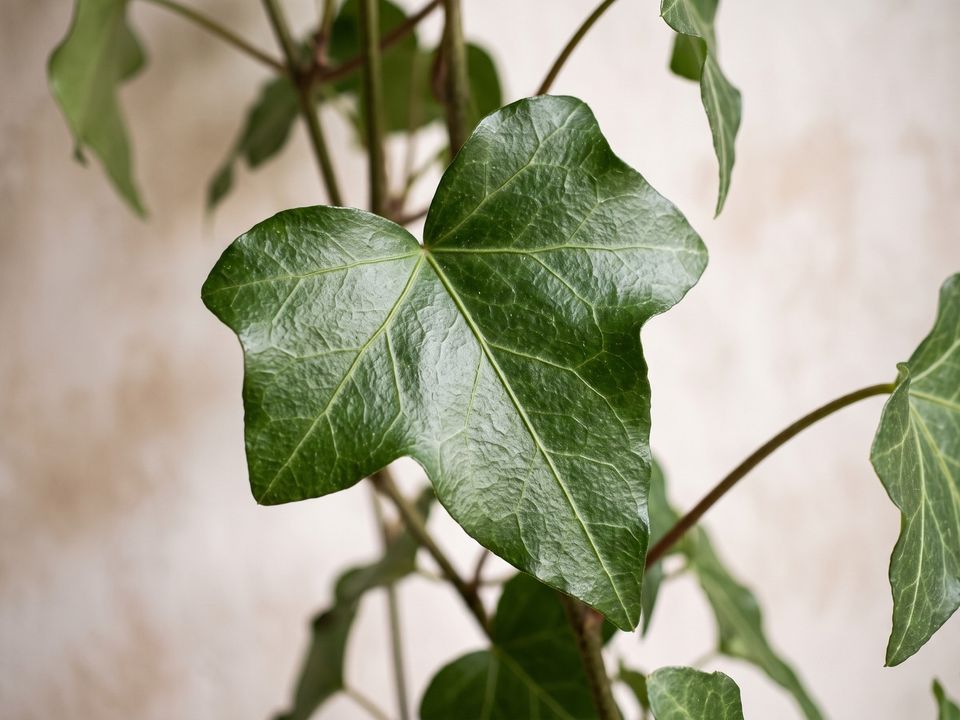
Glossy, lobed leaves with pale veins, on strands that race down a shelf. Classic charm for a cool room and a regular trim.
2.3/5
how easy it is to care for
4.1/5
how much it stands out visually
: Dim to bright
A cool spot by the glass, with no sun on its leaves
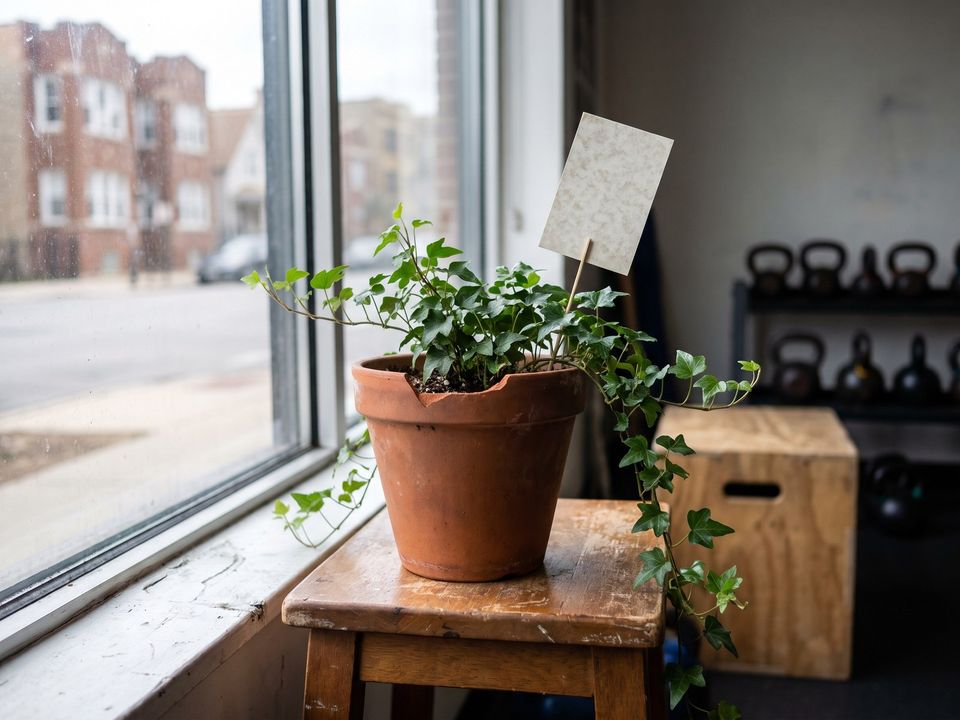
Happiest close to a window but out of the sun’s path, in a room that stays on the cool side. Sun through glass can scorch its leaves, and farther back it gets by, just growing slower.
Give it the coolest window in the house. That’s often a north-facing sill, or an east one where the sun has moved on by late morning. A stand a few feet back from a south or west window also works, clear of the afternoon rays.
Its roots are in the woods of Europe, from Scandinavia east to Russia, and NC State calls it a shade-tolerant vine. It’s also hardy outdoors to USDA zone 4, so cool air is home turf. A sunny sill above a radiator in January, warm from both directions, is the spot it likes least.
If you have to choose, give it less sun and more cool.
: Weekly+
Drinks every 4-6 days, stretching to 9 in winter
Water well about every 4-6 days in summer and 6-9 in winter, letting the surface of the mix dry a little between. Clemson names too little water as one of its main indoor troubles.
A glazed or plastic pot holds moisture longer than terracotta, if you want fewer waterings.
Winter is where it struggles. NC State lists twospotted spider mites among its pests, and in radiator-dry air they can tuck into a thick tangle of ivy strands. If you spot them and that bothers you, consider rinsing the vines under the shower every few weeks; it will likely pull through either way.
Gone for a while? Ten days is fine if it’s soaked the day you leave; pull it back from a sunny window so it lasts longer.
: Medium
Fast vines that trail 3-6 feet from a hanging pot
Wind it around a wire hoop or frame for the classic ivy topiary, or let strands spill 3-6 feet from a hanging basket or high shelf; it grows fast enough to keep the snips coming.
Left alone, a strand reaches for anything vertical, gripping with the short aerial rootlets that line its stems. NC State notes they damage paint outdoors, so steer runners away from painted walls.
Any strand lying across damp soil roots at its nodes (Missouri Botanical Garden). Coil a long one back onto the pot, pin it down with a bent hairpin, and the crown fills in; or snip a few and start a second pot.
On variegated kinds, watch for all-green shoots: Clemson notes that cultivars like 'Gold Heart' tend to revert to the plain green, more aggressive form. Clip them at the base to keep the pattern.
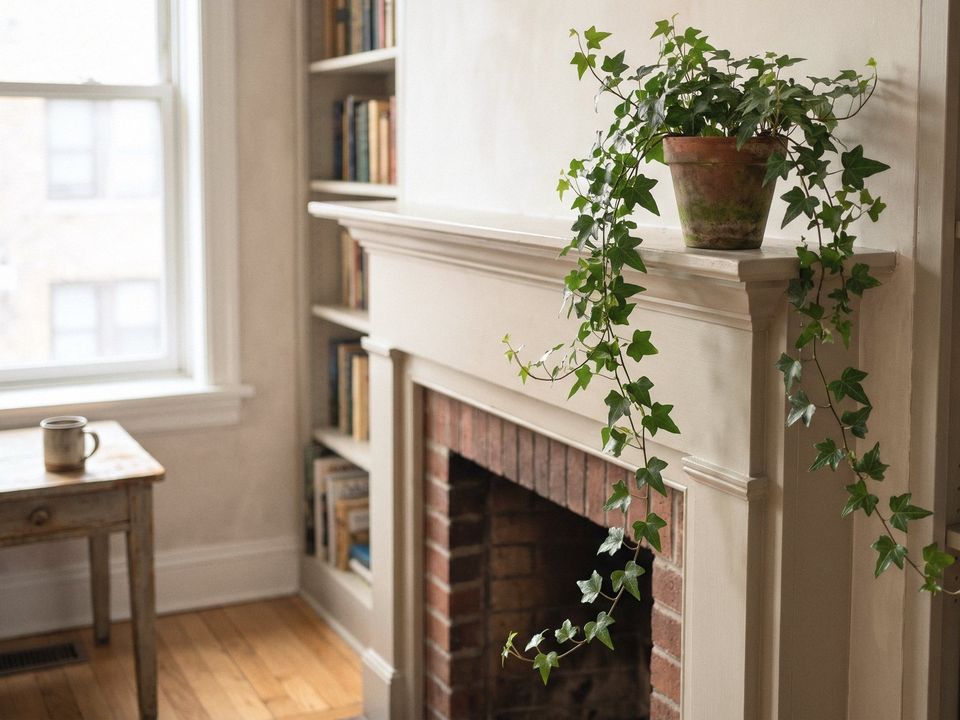
Keep it a houseplant: NC State and Missouri Botanical Garden both flag it as invasive outdoors. Indoors, give it height: a basket hung by a cool window, the top of a bookcase, a mantel where strands can fall.
: Mildly irritating
Chewing can upset the stomachs of dogs, cats, or kids
- DogsMildly irritating
- CatsMildly irritating
- KidsMildly irritating
A chewed leaf may irritate the mouth and stomach of a pet or child, with drooling, vomiting, or diarrhea that passes. The ASPCA lists it as toxic to dogs and cats, with stomach signs only.
The leaves carry more of its saponins than the berries do, and the sap can leave a rash on skin, so gloves help when you trim.
Its defense is a set of triterpenoid saponins, along with polyacetylene compounds (NC State). Hederagenin is the saponin the ASPCA names, though one assay of dried leaves found far more hederacoside C, 21.83 mg/g against 0.02 mg/g of hederagenin (Phytochemical Analysis, 2003). For pets, the trouble stays in the gut in the ASPCA’s description.
For people, the list runs longer, to delirium and convulsions after leaves are eaten (NC State). That’s a rare edge, not the usual course of a nibble.
Most nibbles likely pass at home. If symptoms don’t settle, or anything worries you, call Poison Control for a child. For a pet, call your vet or the ASPCA Animal Poison Control Center (a fee may apply).
A dangling vine is a toy to a cat. Hang it high, keep the strands trimmed well above paw reach, or give it a room chewers rarely visit.
- ASPCA: mild for dogs.
- Merck Veterinary Manual: mild for dogs (rates the whole genus).
- Pet Poison Helpline: mild for dogs (rates the whole genus).
- ASPCA: mild for cats.
- Merck Veterinary Manual: mild for cats (rates the whole genus).
- Pet Poison Helpline: mild for cats (rates the whole genus).
- NC State Extension: mild for kids.
Cats and dogs: Most of the leading sources agree.
Kids: Sources disagree (NC State toxic, UC ANR mild; the majority wins, a tie goes lower).
: Average
50-80°F; average humidity is fine
Happiest at 50-80°F, and it shouldn’t sit below 45°F. It wants at least 35% humidity.
- Temperature
- 50-80°F
: Spider mites
Spider mites and mealybugs; check leaf undersides
Spider mites hide on the leaf undersides, and mealybugs tuck into leaf axils and stem joints. Aphids, scale, and whiteflies visit less often: look at shoot tips, stems, and along the veins.
- Spider mites
- Mealybugs
- Aphids
- Scale
- Whiteflies
Spider mites are its big problem indoors, worst in warm, dry winter air (UMN). NC State also lists aphids, mealybugs, and scale, plus leaf spots and stem rot.
Spider mites are tiny, so you see the damage first: pale, speckled leaves and, in a bad case, fine webbing. Rinse the plant hard in the shower with lukewarm water, undersides included, and repeat every week or so; UMN says repeated washing keeps them down. If they persist, spray with insecticidal soap or horticultural oil, and move it somewhere cooler.
Aphids cluster on the soft new tips (RHS says especially on indoor plants); mealybugs look like tufts of white cotton; scale looks like small brown bumps on the stems. Wipe them off with a cotton swab dipped in rubbing alcohol, then check again next week.
Leaf spots and stem rot come with wet leaves and soggy soil: water the soil, not the leaves, and let the surface dry between soaks (5-7 days in most rooms).
: More
Feed and pinch 6× a year, wipe 4×, repot when snug
Feed monthly in spring and summer while it grows, and pinch shoot ends about 6 times a year for a bushier plant. Dunk the leaves upside down in soapy water 4 times a year. Repot when it’s top-heavy or dries fast.
- Feed6× a year
- Pinch6× a year
- Clean leaves4× a year
- Repot1× a year
Any ordinary potting mix that drains fast, in a pot with a drainage hole or a hanging basket, so it can trail.
Repot when the roots fill the pot, in spring, one pot size up.
Food is optional: a balanced houseplant fertilizer every two or three months in spring and summer is plenty, and none in winter (Clemson). A white crust on the soil or the pot rim means it’s getting too much.
: Simple
Glossy lobed leaves, pale-veined, in plain green
Each lobed leaf is one plain green, with pale veins fanning across it. The surface is glossy, and the strands grow dense enough to cover the soil completely.
Where to find me
Not yet pilferableFun fact
It lives two lives. Young, it’s the lobed climbing vine you know; after about 10 years, it turns shrubby, with unlobed leaves, greenish-white flowers and blue-black berries.
Designer tips
Classic and a little romantic: trailing ivy softens hard edges, from a bookcase to a mantel.
Troubleshooting
The leaves look pale and speckled
Spider mites, most likely; look under the leaves for fine webbing and tiny moving specks. A hard rinse in the shower, repeated weekly, and a cooler spot usually knock them back.
Why is it long and stringy, with bare stems?
Too little light, and not enough trimming. Closer to a window it fills in, and cutting the long stems back keeps ivy leafy (RHS); the pieces root in water if you’d like to pot them back in for a fuller plant.
It’s struggling by the radiator
Heat is the likely trouble: it prefers a cool room, and warm, dry air is where spider mites thrive. A cooler window away from the radiator usually suits it better.
See all 9
Why is my variegated ivy turning plain green?
Not enough light, usually: variegated plants tend to revert to solid green in low light (UMN Extension). Nearer a bright window, new leaves likely keep their pattern, and the all-green stems can be snipped back to where the pattern starts.
My cat ate some ivy leaves
It’s mildly irritating: the ASPCA lists vomiting, belly pain, drooling, and diarrhea, stomach signs that usually pass. If they keep up or your cat seems unwell, call your vet or the ASPCA Animal Poison Control Center.
Can it irritate my skin?
It can: the sap causes redness, itching, and even blisters in some people (NC State). Gloves and long sleeves spare you when you prune it (RHS).
Can it go outside?
In a container on a porch or patio, yes, as NC State suggests. Keep it out of the ground, though: NC State calls it invasive, climbing trees and smothering the plants beneath.
I’m going away for ten days
Ten days is usually fine if it’s soaked the day you leave; pulling it back from a sunny window helps it last longer.
Will it flower or make berries?
Not as a houseplant. Ivy flowers only once it reaches its adult, shrubby stage, which trimmed houseplants don’t (RHS, NC State).
Propagation
Yes, easily, from stem cuttings.
- Cut a piece of stem with at least two leaves and set it in a glass of water, or push it into damp potting mix.
- In mix, cover it with a clear plastic bag and keep it bright but where sun doesn’t land on the leaves, then take the bag off once new growth shows (RHS).
- It roots in three to six weeks (Iowa State Extension); pot several together for a full plant.
The PILF Matrix
2.3/5
how easy it is to care for
4.1/5
how much it stands out visually
“The one with Ivy League looks and a wild side.”


- ivy
Rated 1-5, with 5 being easiest
Built from light, water, air, pests, and upkeep.
Rated 1-5, with 5 being easiest
Rated 1-5, with 5 being highest presence
Built from its scale (size, shape, growth) and its look (color and flowers, shine, fullness).
Rated 1-5, with 5 being highest presence
Where it sits and what sun touches it.
- Dim shadeA dark corner or a windowless room; natural light casts no shadow
- Bright shadeBack from the window in a south-, east- or west-facing room, or right by a north-facing one, where only low early or late summer sun reaches it
- Filtered sunBehind a sheer curtain or tinted glass; the sun’s shadows are blurred
- Partial sunIn an east- or west-facing window: up to a few hours of direct sun
- Full sunThe sunniest spot you have, usually a south-facing window, with direct sun 6+ hours a day
How often, and what the soil does between.
- MonthlyEvery 2-3 weeks in summer and 3-5 in winter; the soil dries all the way between
- 2-3× a monthEvery 7-14 days in summer, longer in winter; the top of the soil dries between
- Weekly+About every 4-8 days in summer; the soil stays lightly damp
How much room it usually takes indoors.
Size
- TinyUnder 6 inches tall or wide; for a desk or a sill
- Small6 inches to 1.5 feet tall or wide; for a shelf or a sill
- Medium1.5 to 3 feet tall or wide; for a table or a stand
- Large3 to 6 feet tall or wide; for the floor
- GiantOver 6 feet tall or wide; a statement in the corner
Shape
- TreeA trunk that branches into a canopy
- CaneBare stalks topped with leaves
- UprightStiff stems or leaves rising straight from the soil
- FountainLeaves or fronds arching out from the center
- BushyA full, rounded mound of leaves
- RosetteLeaves radiating from one low point
- ViningTrails, climbs, or both
Growth
How fast it gets there.
- SlowUnder 6 inches of new growth a year
- Moderate6-12 inches a year, mostly in spring and summer
- FastOver 12 inches a year; it may want trimming or training
What risks exist for pets and kids.
- Pet & kid safeNothing to worry about
- Mildly irritatingMay irritate the mouth or stomach if chewed, or for some plants, the skin if handled
- Moderately toxicCan cause illness if eaten, though typically not serious or fatal
- DangerousCan cause serious illness if eaten, including some reports of death
- Not yet ratedNot clearly rated by our sources; please check with your vet or doctor
For its safety ratings, PILF relies on research and guidance from leading sources, including the ASPCA, Pet Poison Helpline, Merck Veterinary Manual, Poison Control, and Children’s Hospital of Philadelphia, and others.
The small jobs beyond watering, over a year.
- Little upkeepA few small jobs a year beyond watering, like a feed now and then
- Some upkeepA small job about once a month beyond watering, like feeding or turning it
- More upkeepA small job every couple of weeks beyond watering, like a wipe, a turn, or a feed
- Most upkeepA small job most weeks beyond watering, like raising the humidity or misting
- TreeA trunk that branches into a canopy
- CaneBare stalks topped with leaves
- UprightStiff stems or leaves rising straight from the soil
- FountainLeaves or fronds arching out from the center
- BushyA full, rounded mound of leaves
- RosetteLeaves radiating from one low point
- ViningTrails, climbs, or both
How fast it gets there.
- SlowUnder 6 inches of new growth a year
- Moderate6-12 inches a year, mostly in spring and summer
- FastOver 12 inches a year; it may want trimming or training
The temperature and humidity it’s comfortable in.
How dry a room it takes.
- Needs 50%+ humidity
- Fine at 35% humidity
- Fine at 15-20% humidity
The bugs that usually find it, by name.
How often pests find it.
- 5+ regular pests
- 3 regular pests
- Pests are rare
The year’s chores: feeding, pruning, repotting, and cleaning.
Chores beyond water (what needs work means).
- Most upkeep
- Some upkeep
- Little upkeep
Its finish, fullness, and texture.
Color, pattern, and flowers.
- SimpleOne green, one texture, nothing to read
- SuaveA sheen, a stripe, or a clean shape that catches the eye up close
- ShowyColor, pattern, or blooms you see from across the room
How the leaves catch light.
- Matte
- Satin
- Glossy or waxy
How much it fills its pot.
- Soil shows
- Soil partly hidden
- Leaves hide the soil