Wandering Dude
Tradescantia zebrina
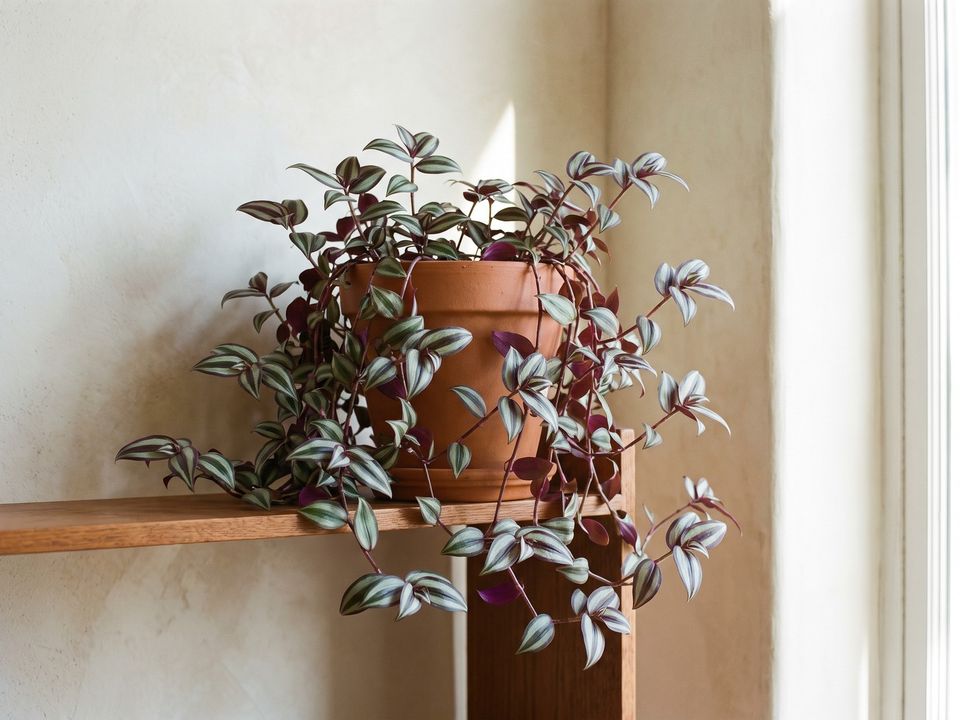
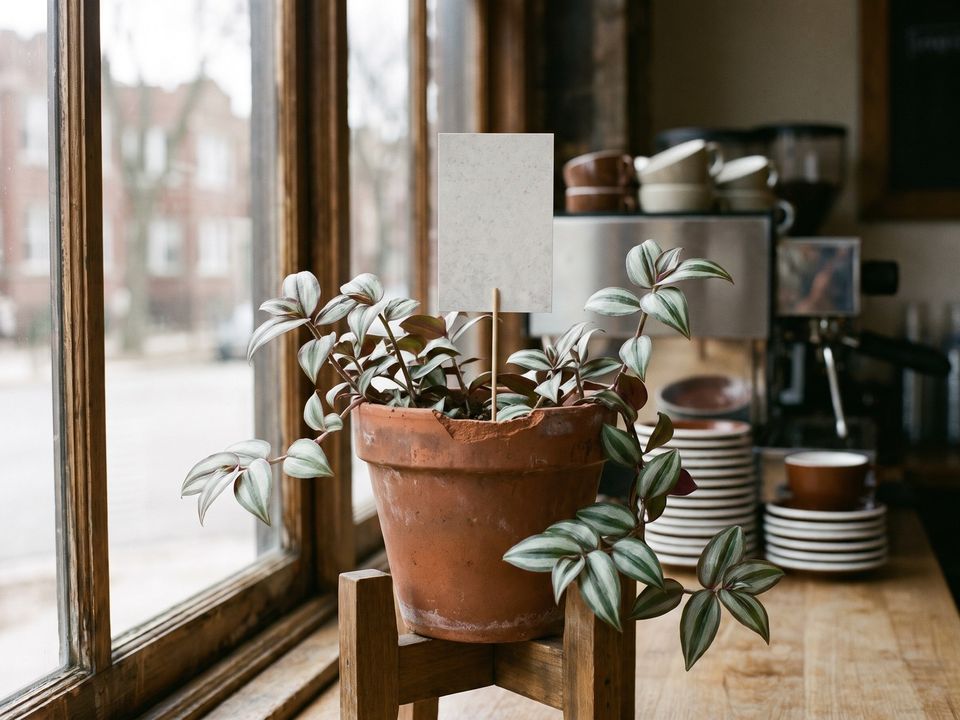
Silver zebra stripes over purple undersides, sparkling when the sun hits. A fast wanderer that rewards a regular trim.
2.9/5
how easy it is to care for
4.5/5
how much it stands out visually
: Shade to full sun
Sheer-curtain sun suits it; dim light dulls its silver
Happiest behind a sheer curtain, and it gets by on bright shade away from direct rays. Its stripes track the light: more sun tends to mean more color, and full sun can bring the boldest stripes.
An east window’s morning sun can reach it straight through the glass; in a south or west window, a step or two back from the pane keeps the silver crisp.
The stems tell you when it’s short on light. They shed their lower leaves, and the ones left at the tips lose some of their color (NC State), so a dim plant ends up looking like a bare string with a tuft on the end.
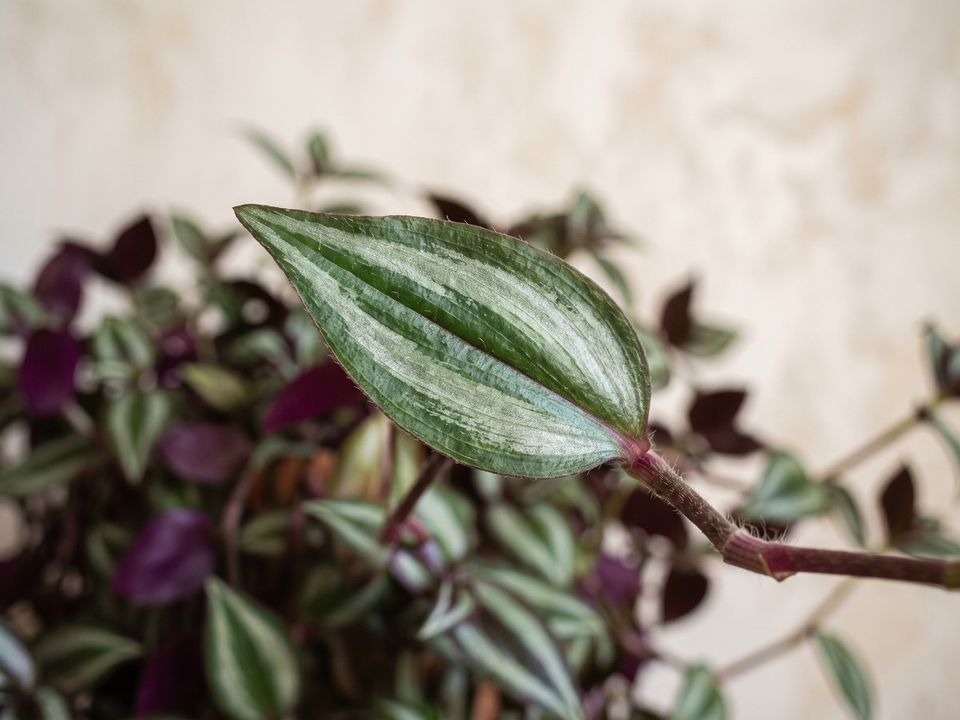
Light also shows off its texture. Fine hairs line each leaf edge, and in strong light the leaves seem to sparkle (NC State). In hot southern sun, though, the color can wash out (NC State); that warning is for gardens down south, and window sun indoors is far gentler.
Read the stripes as its report card: bold silver means you’ve found the right window.
: Weekly+
Let the soil dry between drinks; less in winter
Every 5-7 days in summer, 7-10 in winter, letting the soil dry between. Its succulent stems ride out a missed drink; a sodden pot is what rots the roots and stems.
In a hanging basket, the vines drape over the rim and hide the soil, so part them and pour underneath. NC State warns that wet foliage, especially on a crowded plant, invites leaf spot and other fungal trouble.
NC State says it handles average home humidity as well as high, and it likes temperatures of 65-75 degrees.
One caution for fans of a packed pot: that same crowding that makes it look lush keeps the leaves from drying, so a little thinning now and then lets air move through the tangle.
Gone for a while? Ten days is fine if it’s watered well the day you leave.
: Small
Fast vines on a low mound, 6-9 inches tall, 1-2 feet wide
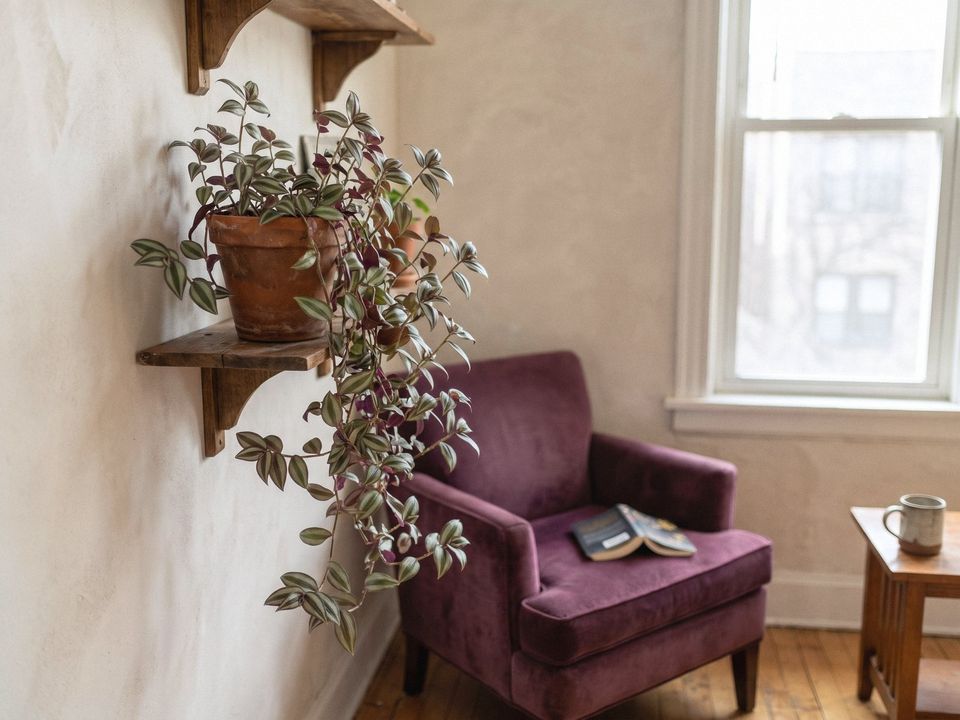
A kept plant spreads 1-2 feet wide, a low mound of striped stems 6-9 inches tall. Show off the purple undersides in a hanging basket or atop a bookcase; snipped stems root easily and, tucked back in, thicken the mound.
Where winters stay warm (zones 9-11), it creeps across open ground as a groundcover (NC State). Indoors you can borrow that habit: interior plantings use it to carpet the soil under taller plants (NC State).
It can take a hard cutback every spring (NC State), which resets a plant gone sparse at the crown. Left alone, its runners can stretch several feet indoors (Texas A&M). A regular trim keeps a potted plant to about 1-2 feet of trail.
It can summer on a patio, but bring it in before nights drop below 50 degrees (NC State).
In a room, its shape belongs at the edges. A window hook, the top tier of a plant stand, or the lip of a mantel all work, anywhere the vines can drop freely.
: Mildly irritating
Sap can itch dog or cat skin; rated safe for kids
- DogsMildly irritating
- CatsMildly irritating
- KidsSafe
Its watery sap may leave a dog’s or cat’s skin red and itchy, and a chewed leaf can irritate the mouth and stomach. For kids it’s rated safe, though the sap may redden skin, so wash hands after a trim.
The sap can irritate skin, so a quick hand wash after trimming is all it takes.
The irritant hasn’t been pinned down. Its toxic principle is listed as unknown and the severity as low, with mouth and stomach irritation if a pet eats it (NC State). A close cousin, Tradescantia fluminensis, is the one with an ASPCA entry, and dermatitis is the only sign it names.
For kids, that same cousin is listed as non-poisonous (Poison Control), and Wandering Dude itself is noted only as a skin irritant (CHOP). If a child’s symptoms don’t settle or anything worries you, Poison Control can help. For a pet whose skin or stomach stays upset, your vet or the ASPCA Animal Poison Control Center can help (a fee may apply).
Hung high, the stems stay clear of a dog’s nose and a cat’s paws. Just pick up the trimmings when you’re done.
- ASPCA: mild for dogs.
- ASPCA: mild for cats.
- Poison Control: safe for kids.
Cats and dogs: Most of the leading sources agree.
Kids: Poison Control lists it as non-poisonous. Its sap can irritate skin or eyes.
: Dry OK
65-75°F; dry air is fine
Happiest at 65-75°F, and it shouldn’t sit below 55°F. Keep it away from cold glass in winter. Humidity can drop to 20% without trouble.
- Temperature
- 65-75°F
: Spider mites
Spider mites most; flip leaves to check undersides
Spider mites come most often, so flip a leaf and look underneath. Whiteflies sit under leaves too, mealybugs tuck into the nodes, aphids gather on new tips, and scale clings to stems.
- Spider mites
- Mealybugs
- Aphids
- Scale
- Whiteflies
A few. Spider mites are the ones to watch; aphids, mealybugs, scale, and whiteflies turn up now and then, and rot if the soil stays soggy.
Spider mites leave fine webbing and a pale, speckled look, mostly in warm, dry air. Rinse the whole plant in the shower, undersides of the leaves included; if they come back, an insecticidal soap spray is the next step.
Mealybugs look like tufts of white cotton where the leaves meet the stem; aphids are small, soft bugs on the new tips; scale looks like small brown bumps. Wipe them off with a cotton swab dipped in rubbing alcohol, or snip off the worst stems and root clean tips instead.
Whiteflies look like tiny white moths that fly up when you touch it. Wash the plant, then spray insecticidal soap, especially under the leaves.
Stems that go mushy at the base mean rot from soggy soil; leaf spot comes from crowding and wet leaves. Water the soil, not the leaves, let it dry more between soaks, and restart from healthy tips if the base is gone.
: Some
Pinch and feed monthly in summer; cut back each spring
From spring through summer, feed monthly and pinch stem tips as needed, about 6 times a year. Each spring, cut it back hard and repot into fresh peaty mix. When it turns leggy, replant tip cuttings in the same pot.
- Feed6× a year
- Prune1× a year
- Pinch6× a year
- Restart from tip cuttings1× a year
- Repot1× a year
Any potting mix that drains fast, in a pot or hanging basket with a drainage hole.
Repot when the roots fill the pot, in spring. Once it’s old and straggly, it’s often easier to start over: tuck fresh tip cuttings into new mix and it fills the pot again.
Food is optional: a houseplant fertilizer at half strength now and then in spring and summer is plenty for a plant that already grows this fast.
: Suave
Silver-striped leaves, purple undersides, glossy, filling the pot
Each leaf wears silver stripes over green, with a deep purple underside. The surface is glossy and waxy, and the stems grow thick enough to cover the soil completely.
Where to find me
Not yet pilferableFun fact
It’s also called inch plant: the leaf nodes along its stems sit roughly an inch apart. Missouri Botanical Garden notes the name usually belongs to a cousin, Tradescantia fluminensis.
Designer tips
Bold stripes and a purple underside: a splash of color that spills over the edge.
Troubleshooting
It’s long and bare near the pot
Too little light, and age; in a dim spot the stems drop their lower leaves. Nearer the window it fills in, and the long stems you cut back can be tucked into the pot to thicken the base.
Why are the leaves losing their stripes and purple?
Too little light. Its colors are strongest in full sun, so a brighter window usually brings the next leaves in bolder.
The stems are going mushy at the base
Rot, from soil that stays soggy. Cut off anything mushy, empty the saucer, and let the soil dry more between soaks; if the base is gone, healthy tips root in a glass of water for a fresh start.
See all 9
Why do the leaves look pale and speckled?
Likely spider mites, its most common pest, mostly in warm, dry air; look under the leaves for fine webbing. A rinse in the shower, undersides included, usually helps, with insecticidal soap if they come back.
My cat chewed a stem
It’s mildly irritating: NC State rates it low severity, with an irritated mouth and stomach if eaten and a red, itchy rash where the sap touches skin. If vomiting keeps up or the skin stays red, call your vet or the ASPCA Animal Poison Control Center.
I’d like to start more from cuttings
Easy: snip a tip a few inches long, strip the lowest leaves, and set it in a glass of water or damp mix. Every stem roots, with no rooting hormone needed.
Can it go outside for the summer?
Yes, once frost is past; ease it into the brighter light over a week or two so it doesn’t sunburn. Bring it back in before nights drop below 55°F, and check it for bugs first.
Does it flower?
Now and then: tiny three-petaled lavender-purple flowers, though they rarely appear indoors. Nothing to do either way.
Why is it called wandering dude?
It’s the newer common name for the plant once sold as wandering Jew. The wandering part fits: the stems trail and root wherever they touch soil.
Propagation
It’s one of the easiest plants to multiply: every stem roots, with no rooting hormone needed.
- Snip a tip a few inches long, strip the lowest leaves, and set it in a glass of water or poke it straight into damp mix; roots form at the nodes (the joints where leaves meet the stem).
- Tuck several back into the mother pot to fill it out.
The PILF Matrix
2.9/5
how easy it is to care for
4.5/5
how much it stands out visually
“The one who’s not looking for anything serious: just room to roam.”


- silver inch plant
Rated 1-5, with 5 being easiest
Built from light, water, air, pests, and upkeep.
Rated 1-5, with 5 being easiest
Rated 1-5, with 5 being highest presence
Built from its scale (size, shape, growth) and its look (color and flowers, shine, fullness).
Rated 1-5, with 5 being highest presence
Where it sits and what sun touches it.
- Dim shadeA dark corner or a windowless room; natural light casts no shadow
- Bright shadeBack from the window in a south-, east- or west-facing room, or right by a north-facing one, where only low early or late summer sun reaches it
- Filtered sunBehind a sheer curtain or tinted glass; the sun’s shadows are blurred
- Partial sunIn an east- or west-facing window: up to a few hours of direct sun
- Full sunThe sunniest spot you have, usually a south-facing window, with direct sun 6+ hours a day
How often, and what the soil does between.
- MonthlyEvery 2-3 weeks in summer and 3-5 in winter; the soil dries all the way between
- 2-3× a monthEvery 7-14 days in summer, longer in winter; the top of the soil dries between
- Weekly+About every 4-8 days in summer; the soil stays lightly damp
How much room it usually takes indoors.
Size
- TinyUnder 6 inches tall or wide; for a desk or a sill
- Small6 inches to 1.5 feet tall or wide; for a shelf or a sill
- Medium1.5 to 3 feet tall or wide; for a table or a stand
- Large3 to 6 feet tall or wide; for the floor
- GiantOver 6 feet tall or wide; a statement in the corner
Shape
- TreeA trunk that branches into a canopy
- CaneBare stalks topped with leaves
- UprightStiff stems or leaves rising straight from the soil
- FountainLeaves or fronds arching out from the center
- BushyA full, rounded mound of leaves
- RosetteLeaves radiating from one low point
- ViningTrails, climbs, or both
Growth
How fast it gets there.
- SlowUnder 6 inches of new growth a year
- Moderate6-12 inches a year, mostly in spring and summer
- FastOver 12 inches a year; it may want trimming or training
What risks exist for pets and kids.
- Pet & kid safeNothing to worry about
- Mildly irritatingMay irritate the mouth or stomach if chewed, or for some plants, the skin if handled
- Moderately toxicCan cause illness if eaten, though typically not serious or fatal
- DangerousCan cause serious illness if eaten, including some reports of death
- Not yet ratedNot clearly rated by our sources; please check with your vet or doctor
For its safety ratings, PILF relies on research and guidance from leading sources, including the ASPCA, Pet Poison Helpline, Merck Veterinary Manual, Poison Control, and Children’s Hospital of Philadelphia, and others.
The small jobs beyond watering, over a year.
- Little upkeepA few small jobs a year beyond watering, like a feed now and then
- Some upkeepA small job about once a month beyond watering, like feeding or turning it
- More upkeepA small job every couple of weeks beyond watering, like a wipe, a turn, or a feed
- Most upkeepA small job most weeks beyond watering, like raising the humidity or misting
- TreeA trunk that branches into a canopy
- CaneBare stalks topped with leaves
- UprightStiff stems or leaves rising straight from the soil
- FountainLeaves or fronds arching out from the center
- BushyA full, rounded mound of leaves
- RosetteLeaves radiating from one low point
- ViningTrails, climbs, or both
How fast it gets there.
- SlowUnder 6 inches of new growth a year
- Moderate6-12 inches a year, mostly in spring and summer
- FastOver 12 inches a year; it may want trimming or training
The temperature and humidity it’s comfortable in.
How dry a room it takes.
- Needs 50%+ humidity
- Fine at 35% humidity
- Fine at 15-20% humidity
The bugs that usually find it, by name.
How often pests find it.
- 5+ regular pests
- 3 regular pests
- Pests are rare
The year’s chores: feeding, pruning, repotting, and cleaning.
Chores beyond water (what needs work means).
- Most upkeep
- Some upkeep
- Little upkeep
Its finish, fullness, and texture.
Color, pattern, and flowers.
- SimpleOne green, one texture, nothing to read
- SuaveA sheen, a stripe, or a clean shape that catches the eye up close
- ShowyColor, pattern, or blooms you see from across the room
How the leaves catch light.
- Matte
- Satin
- Glossy or waxy
How much it fills its pot.
- Soil shows
- Soil partly hidden
- Leaves hide the soil